
 Metal roofing
 Architectural shingles
 Tile roofing
 GAF
GAF Owens Corning
 Flat & low-slope
Free roof inspection with deck photos before we talk money - GAF and Owens Corning certified installation
GAF Flashing Replacement: The San Antonio Owner’s Guide
We stock and install GAF-compatible flashing replacement in San Antonio, with most jobs running between $280 and $650 installed depending on what’s leaking and how much old flashing has to come out. If you’re seeing water stains on a ceiling or damp drywall around a chimney, dormer, or wall-to-roof joint, this is almost always where it starts. Flashing is the metal that redirects water where your roof meets something vertical, and when it fails, the leak follows fast.
Which GAF Models This Applies To
GAF flashing isn’t tied to a single shingle line. Whether you have Timberline HDZ, Timberline UHDZ, Royal Sovereign, or a GAF TPO flat roof, the flashing component itself is selected by roof location: step flashing along walls, apron flashing at the base of a chimney, pipe boot flashing around plumbing vents, or valley flashing where two slopes meet. The real compatibility gotcha is material matchup, not model number. GAF warranties assume you’re pairing their shingles with a 26-gauge galvanized or aluminum flashing that won’t react with the shingle’s adhesive strip. In San Antonio, we regularly see premature flashing failure around chimneys on Timberline roofs because the original installer used 28-gauge stock and the sun’s heat just cooks it. When we quote a replacement, we match the flashing gauge and profile to the existing system so the GAF warranty stays intact. The OEM-vs-aftermarket decision is simple when you understand how warranties are enforced: GAF’s warranty covers the shingle, not the metal. So a quality 26-gauge aftermarket flashing from a brand like Gibraltar or Berger is generally indistinguishable in performance from GAF-branded flashing, and it’s what we keep on the truck for most replacements around San Antonio’s older neighborhoods.
Styles & brands we work with
Signs Your GAF Flashing Replacement Is Failing
- Water stains on ceilings or walls near a chimney or dormer. Flashing at these vertical transitions carries a lot of water; when the seal breaks or the metal rusts through, water follows the first gap it finds. This is the most common failure we see on Alamo Heights homes built before 1980.
- Visible rust or pinholes on the flashing metal itself. San Antonio’s hard water and occasional hail combine to eat through thinner flashing in a decade or less. If you can see rust on a pipe boot or wall flashing, it’s already leaking or will be within one rainstorm.
- Granule loss from shingles near flashing joints. When flashing pulls away, water works under the shingle edge and strips the granules, leaving dark patches. Those bare spots are a countdown until the mat itself fails and water gets to the decking.
- Loose or lifted flashing edges you can see from the ground. Wind-driven rain and Texas heat cause caulk to dry and flashing nails to back out. If the metal is lifting away from the chimney or wall, the seal is gone and you’re running on luck.
- Stains or moisture inside the attic around the roofline. This often means step flashing behind a wall or at a dormer has failed, and the water is tracking along the roofline before it shows up as a ceiling stain. By the time you see it in the house, the decking below is already wet.
See the difference
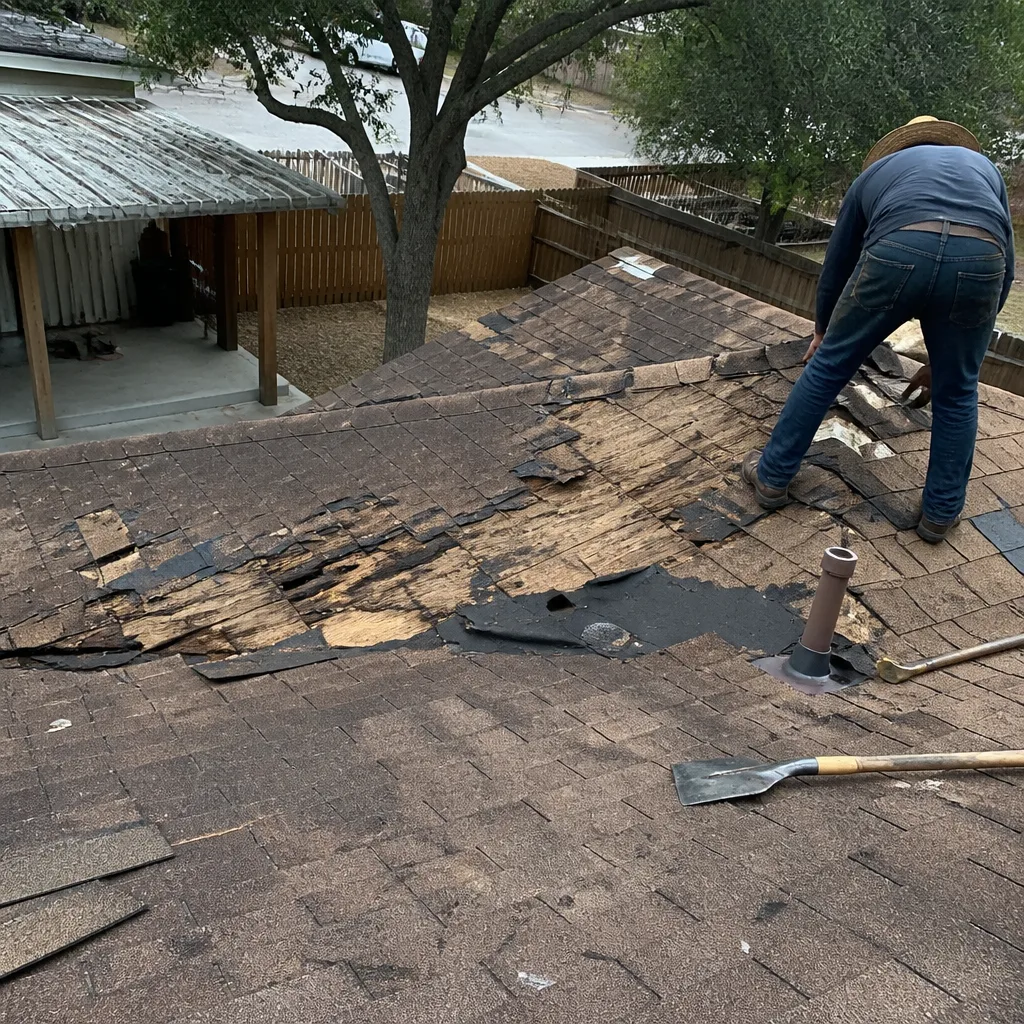 Before
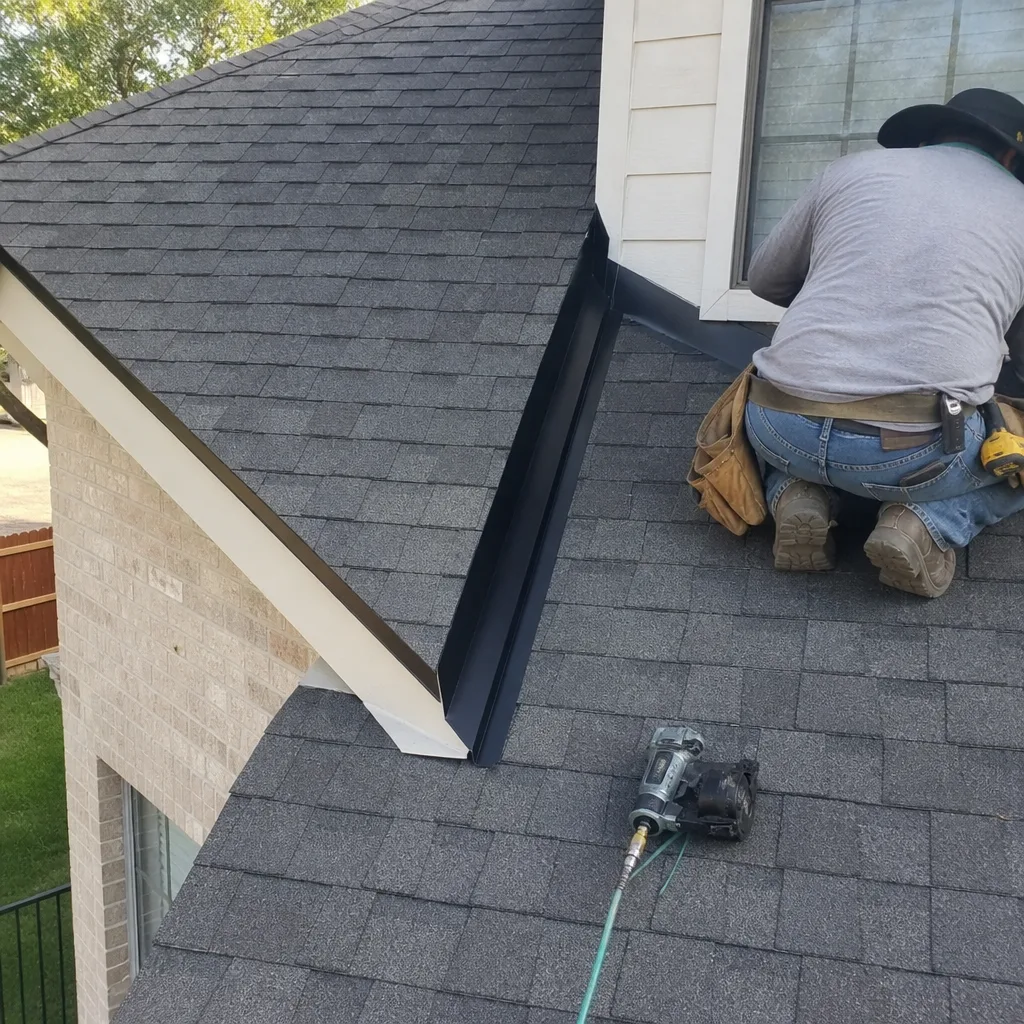 After
After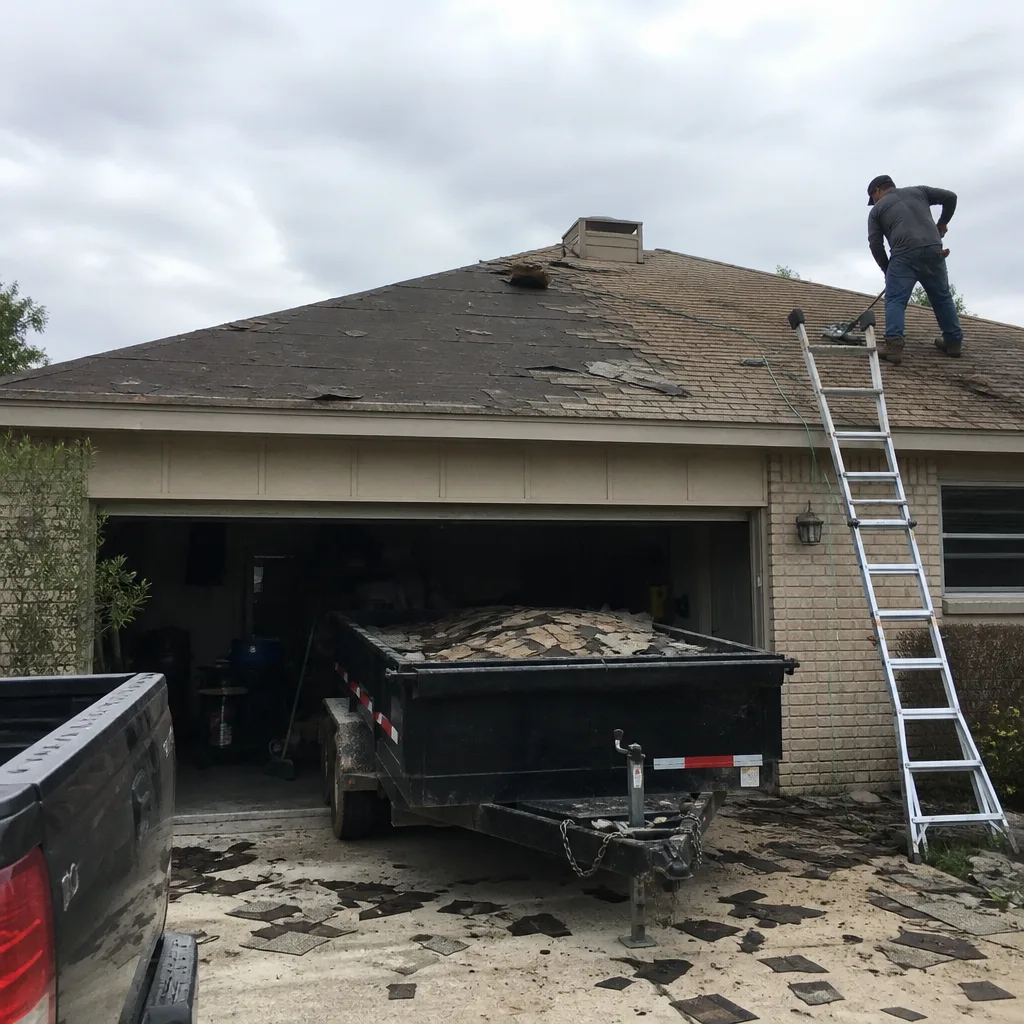 Before
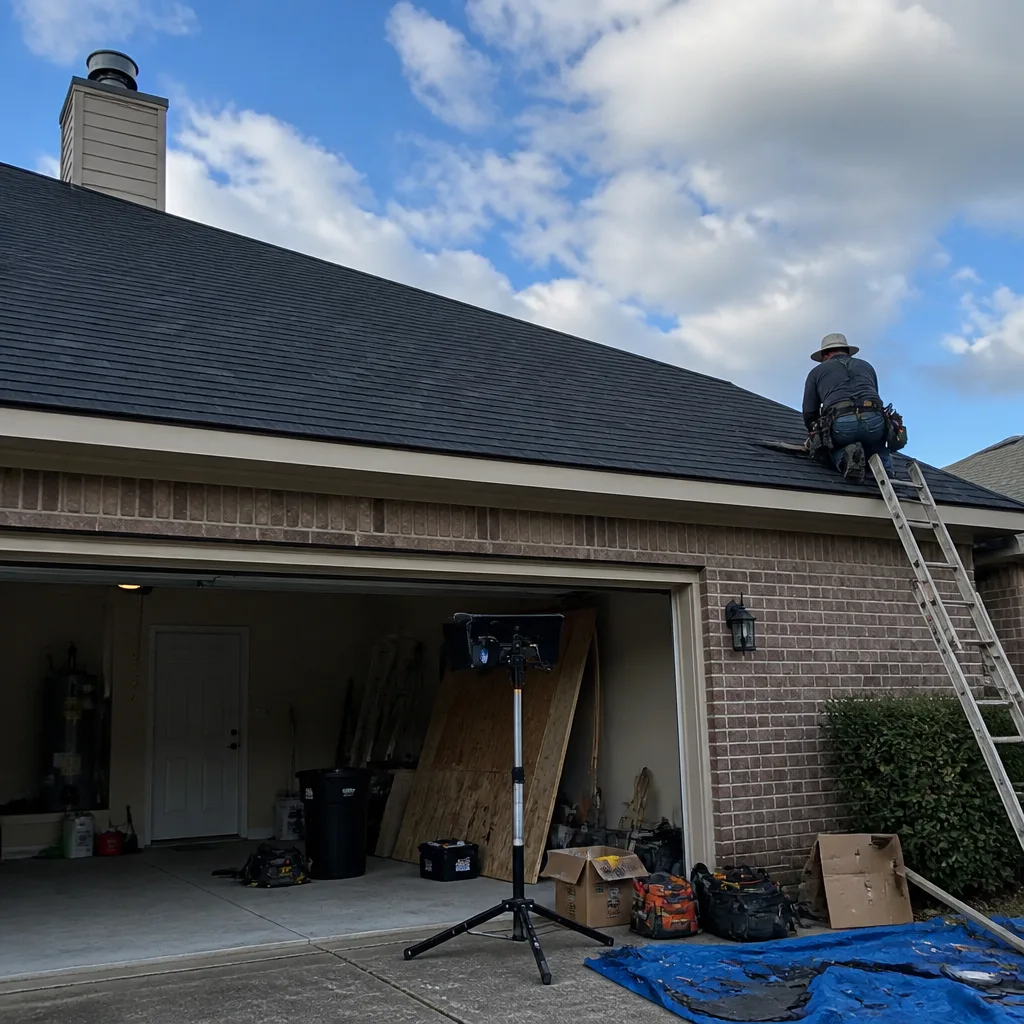 After
After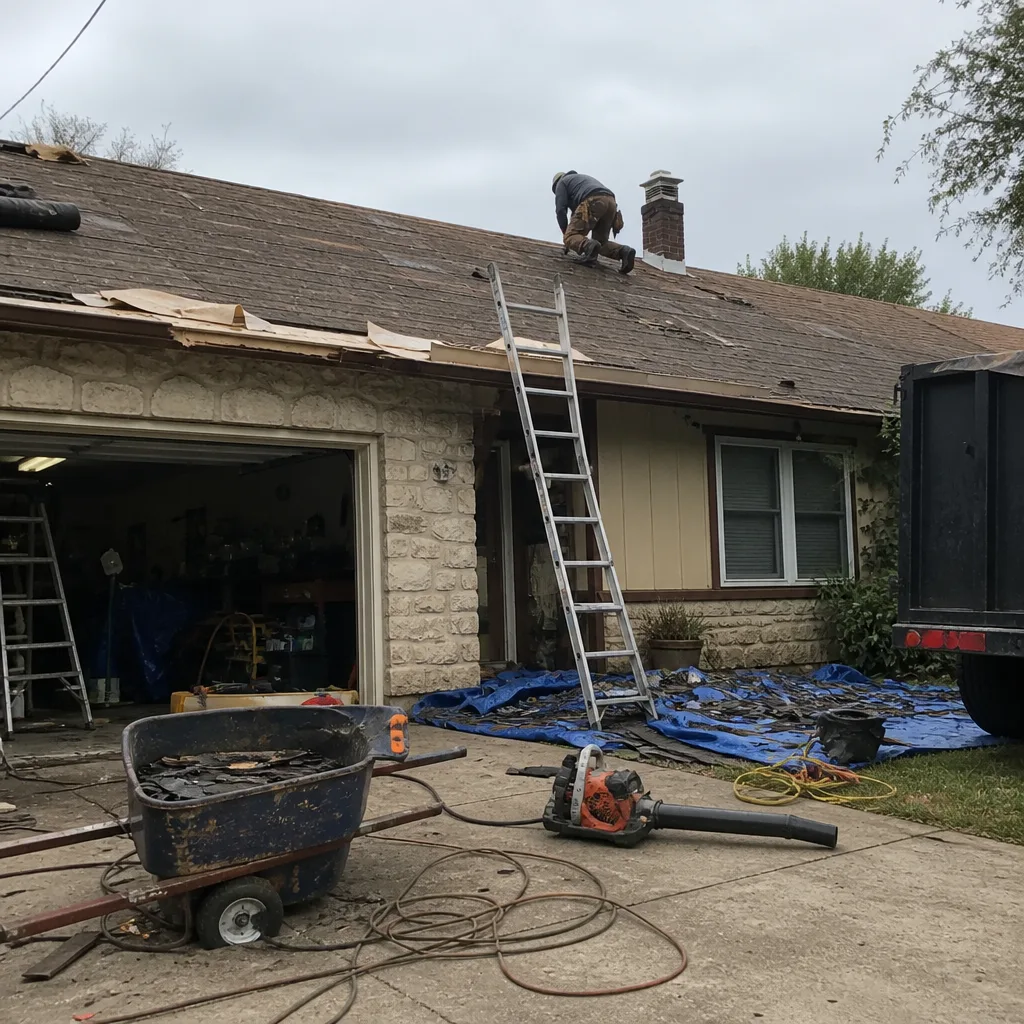 Before
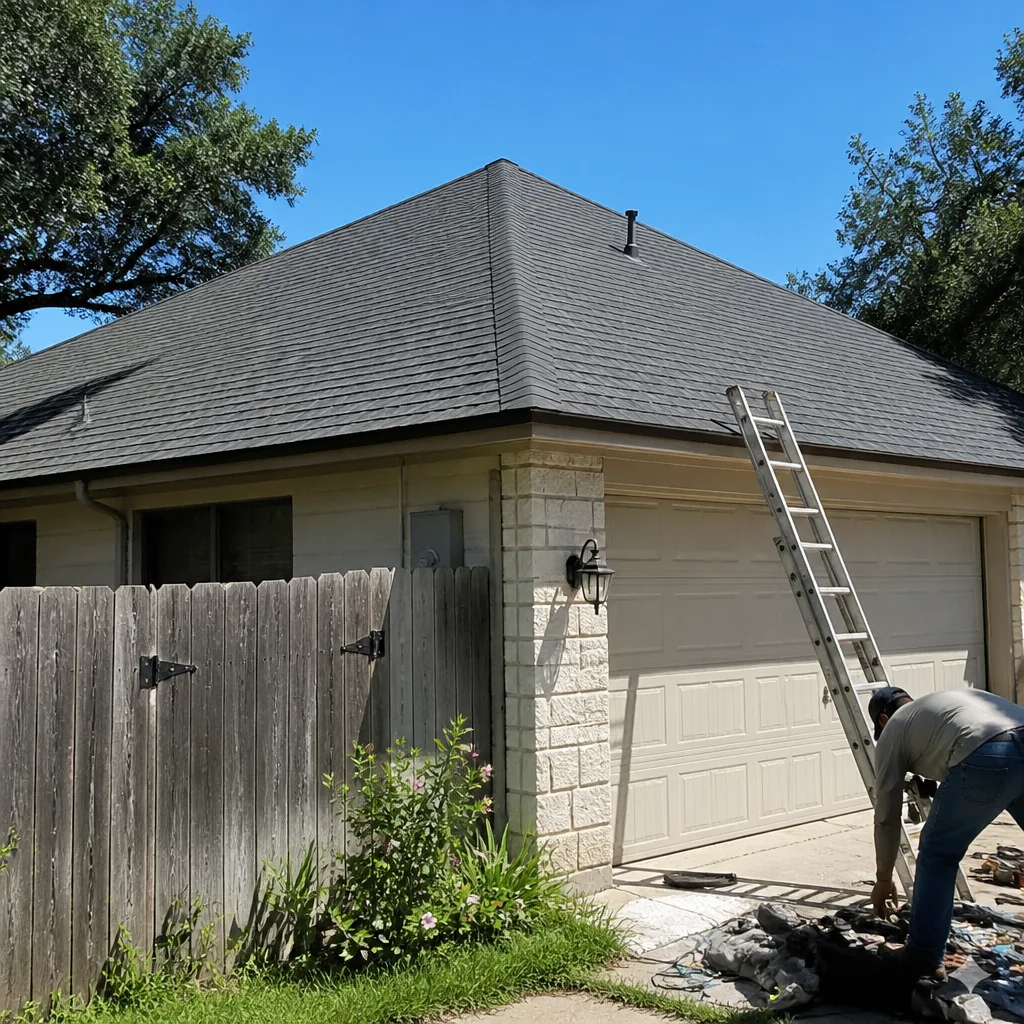 After
AfterReplacement Cost & What’s Included
For GAF flashing replacement in San Antonio, expect to pay between $180 and $340 for a simple pipe boot or small step flashing section, and between $400 and $650 for a full chimney flashing rebuild that includes the apron, step flashing, and counter-flashing. The range is driven by how much of the old flashing has to be removed and whether the surrounding shingles need to be lifted or replaced. Every Mercer Roofing Co San Antonio quote is a written, itemized price before any work starts, parts and labor separated, with no change orders at the end. The work is covered by our 365-Day Done Right Promise: if the flashing doesn’t hold, we return and fix it free. We also pull the surrounding shingles back rather than caulking over a problem, which costs a bit more but means the fix lasts years, not months.
DIY or Call Us?
A homeowner can safely spot-check flashing from the ground or from an upper window: look for lifted edges, visible rust, or missing caulk beads around chimneys and vents. You can also check the attic for water trails on the roof decking after a hard rain. What we don’t recommend is DIY flashing repair on a sloped roof, especially around chimneys and walls where getting the overlapping layers wrong means you’ve created a bigger leak than you started with. Working on a roof in San Antonio is also dangerous in ways most people don’t expect: our crews deal with heat, sudden afternoon storms, and pitches that look walkable from the ground but aren’t. If you’ve spotted the signs and want a straight answer and a written price, call us at (254) 276-4369. Grant Whitlock will walk your roof personally before any estimate is written.
FAQs
In the San Antonio climate, expect flashed areas to last 15 to 25 years depending on material gauge, sun exposure, and how well the original install was done. Aluminum and galvanized flashing both hold up, but the sealant at the edges typically fails long before the metal does, so re-caulking every five to seven years is the best way to extend flashing life. Call (254) 276-4369 for an exact evaluation of your flashing’s condition and a free estimate.
Sometimes a small section of flashing can be re-sealed or re-nailed to buy a year or two, especially if you catch the problem early and the metal itself is still intact. But once the metal is rusted through, pitted, or torn, repair is a temporary patch at best and you’re paying for the same work twice. We’ll tell you honestly which situation you have, with the written price for whichever route makes sense.
A simple pipe boot or small step flashing replacement typically takes one to two hours on site. A full chimney flashing rebuild with new counter-flashing is usually a half-day job, including removing old metal, inspecting the decking under the lifted shingles, and reinstalling everything in the correct overlap order. We’ll always give you a time window in writing before we start.
We keep 26-gauge galvanized and aluminum step, apron, and pipe boot flashing in common sizes on our trucks, so the most frequent replacements can be done same-day. Chimney counter-flashing and custom-bent pieces for irregular rooflines may require a quick trip to our supplier, which can add a day to the timeline. Call us at (254) 276-4369 and we’ll tell you exactly what your roof needs and when we can get it done.
Written by Grant Whitlock, Owner, Mercer Roofing Co San Antonio, serving San Antonio and nearby areas.