
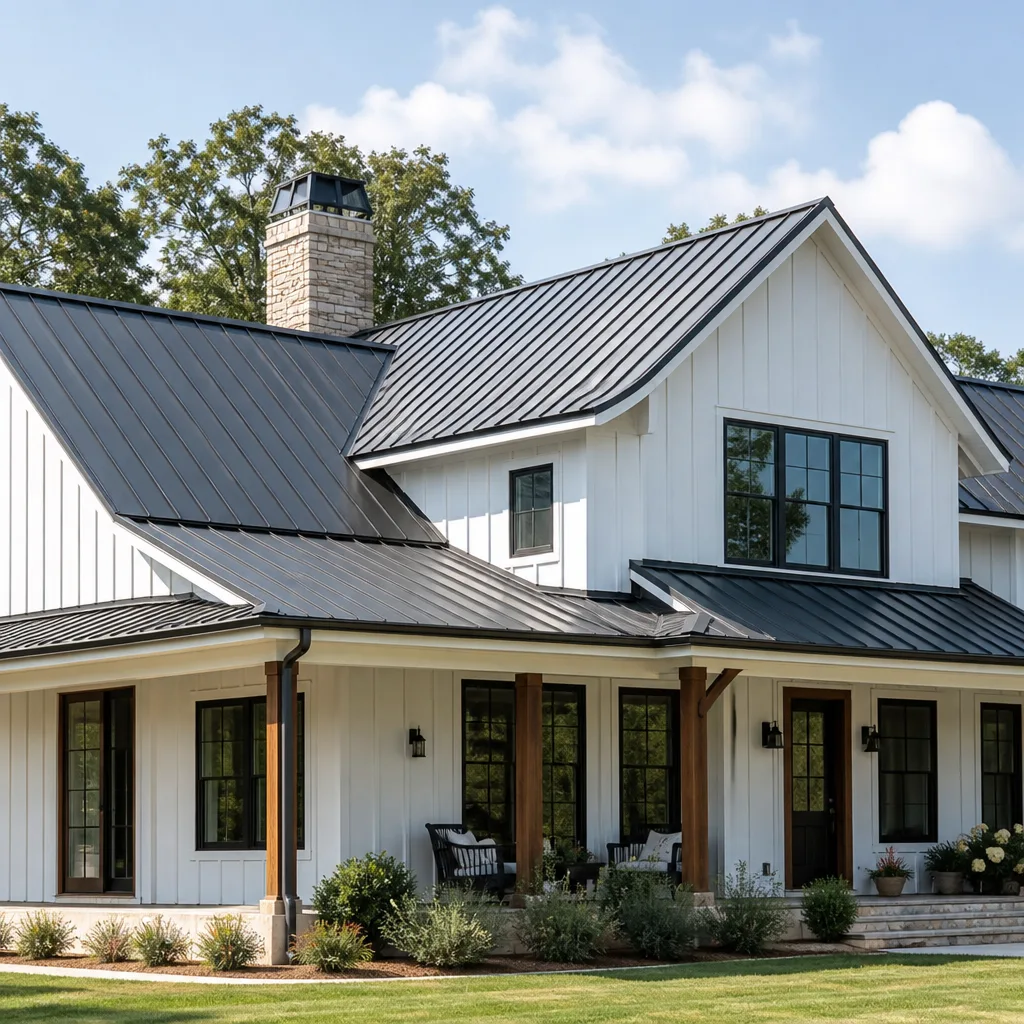
 Metal roofing
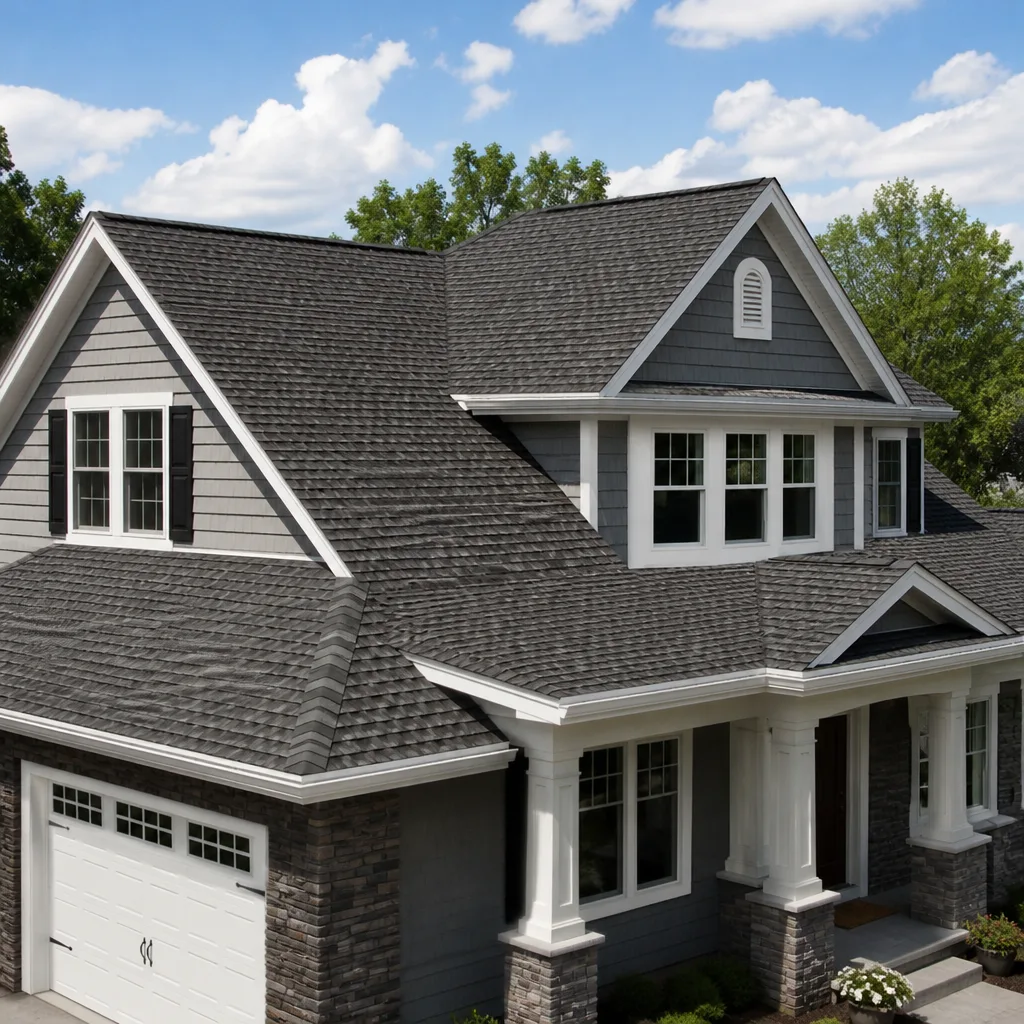 Architectural shingles
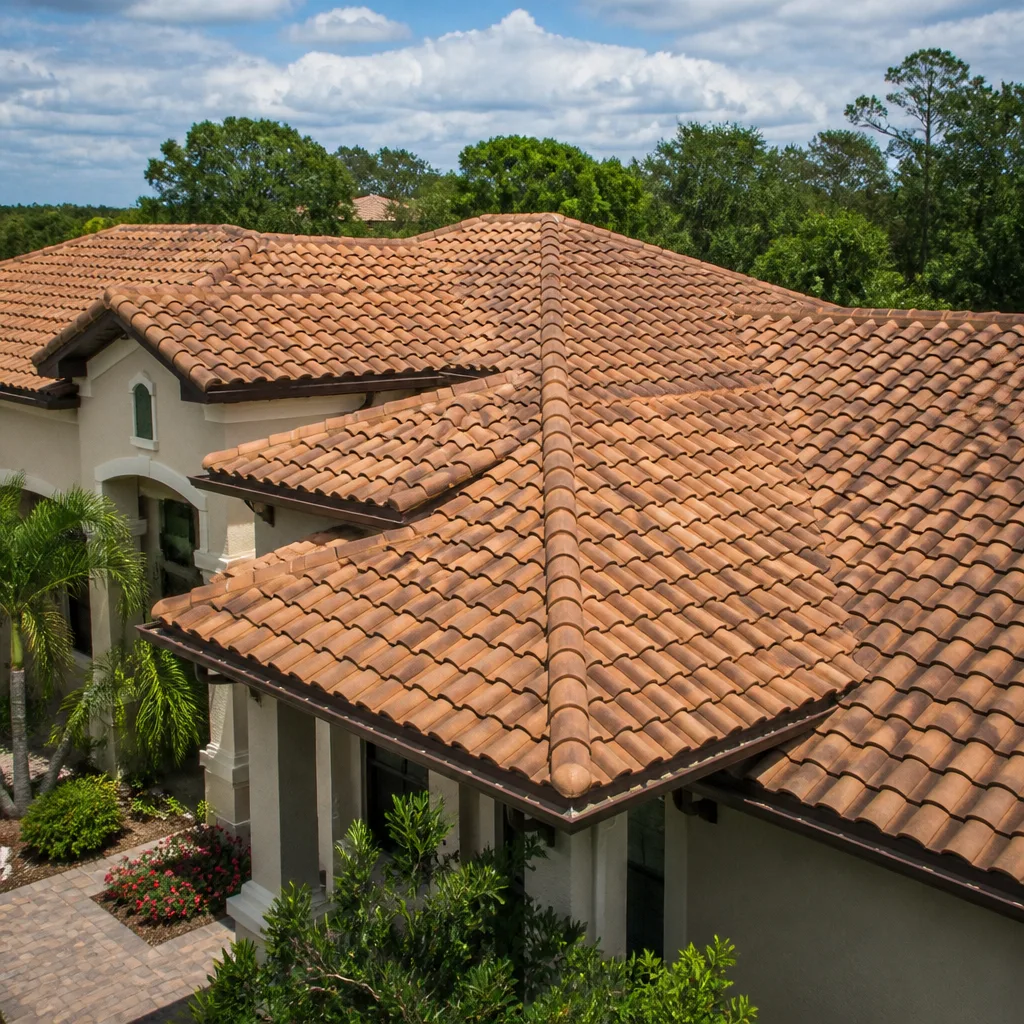 Tile roofing
 GAF
GAF Owens Corning
 Flat & low-slope
Free roof inspection with deck photos before we talk money - GAF and Owens Corning certified installation
Boral Flashing Replacement: The San Antonio Owner’s Guide
Boral-compatible flashing replacement in San Antonio typically runs $225 – $480 installed for a standard pipe boot, valley, or step flashing section, and we keep the common Boral profiles stocked on our trucks so most swaps happen in a single visit. Flashing is the folded metal that seals the seams where your roof meets a wall, chimney, skylight, or pipe penetration. Most San Antonio homeowners discover a flashing failure the hard way: a water stain on the ceiling after a heavy spring thunderstorm rolls through, or peeling paint along an interior wall that didn’t exist last summer.
Here’s what’s important to know up front: Boral roofing products are built differently than standard asphalt shingles, and their flashing details matter. Boral’s stone-coated steel and tile profiles demand flashing with specific dimensions and fastener spacing. Get it wrong, and you get a warranty void and a leak that returns. We’ve fixed both. Call (254) 276-4369 for a free estimate on Boral flashing replacement, with the written price in hand before we start.
Which Boral Models This Applies To
Boral’s roofing lineup in Texas falls into two main families: the stone-coated steel profiles (like the Boral Steel line with its Mediterranean and shake-look variants) and the tile profiles modeled on classic barrel and flat clay. Flashing requirements differ between them. Steel profiles use a concealed fastener system with specific metal-to-metal contact points, while tile profiles need elevated flashing details to keep water flowing off the tile surface and into the valley channel.
The compatibility gotcha most homeowners miss: Boral tile flashing on San Antonio homes is often cut to match the specific tile profile’s rise, not a generic 1-inch step. If you buy a big-box flashing kit sized for a 7/8-inch rise and your Boral profile carries a 1-3/8-inch rise, water backs up behind the flashing instead of shedding off. We measure the rise, the pan depth, and the existing lap before we order or cut any replacement.
OEM versus aftermarket: Boral’s factory flashing is high quality, but we’ve also installed properly spec’d aftermarket 26-gauge galvanized and aluminum flashing on Boral roofs across San Antonio with excellent results. The key isn’t the brand stamp; it’s the material gauge, the rise match, and the sealant compatibility. We’ll show you the measurements and give you a straight recommendation either way. We’re an independent service provider, not affiliated with Boral, so our loyalty is to the roof in front of us, not a parts catalog.
Styles & brands we work with
Signs Your Boral Flashing Replacement Is Failing
- Water stain on the ceiling near a wall or chimney. This is the classic flashing failure signature. Water runs along the flashing seam, follows a rafter, and shows up a few feet inside the house before it ever shows up on the wall itself.
- Visible rust or corrosion streaks on metal flashing. In San Antonio’s heat and humidity, steel flashing that wasn’t primed or is past its coating lifespan will start throwing rust streaks down the roof. Once the coating is breached, the metal beneath is thinning.
- Lifted or curled flashing edges. Wind-driven rain from a Hill Country storm can work a loose flashing edge over time. Walk the yard and look at the roofline. If you can see a gap between flashing and wall cladding, water can find that gap.
- Granule or stone loss concentrated near penetrations. On Boral stone-coated steel, if you notice the stone coating wearing thin directly around a pipe boot or wall junction, water is likely sheeting across that flashing at speed. It’s a sign the flashing path is doing more work than it was designed to do.
- Mold or mildew odor in one particular room with no visible source. Slow flashing leaks don’t always stain immediately. They make the drywall damp, the damp grows mold, and the smell gives it away before the watermark does. We’ve found more than one failing Boral pipe boot this way.
See the difference
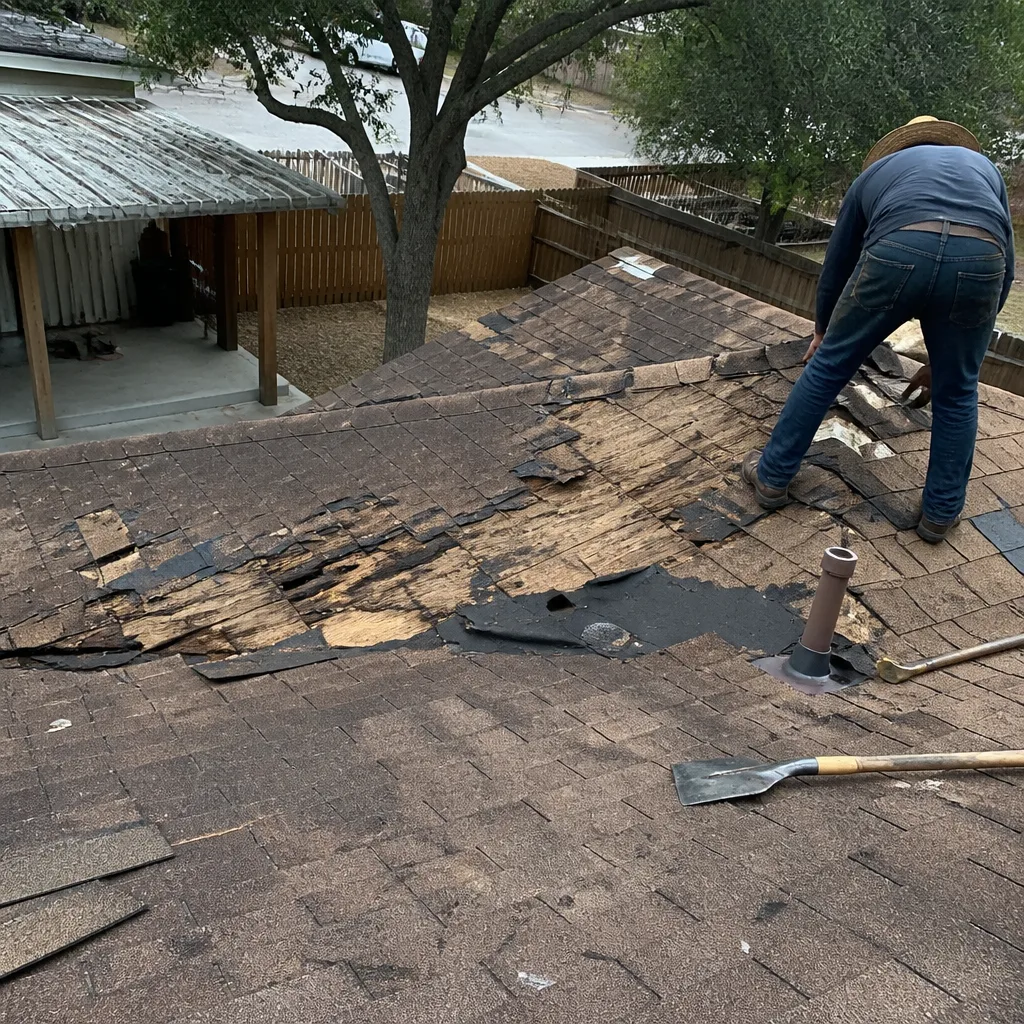 Before
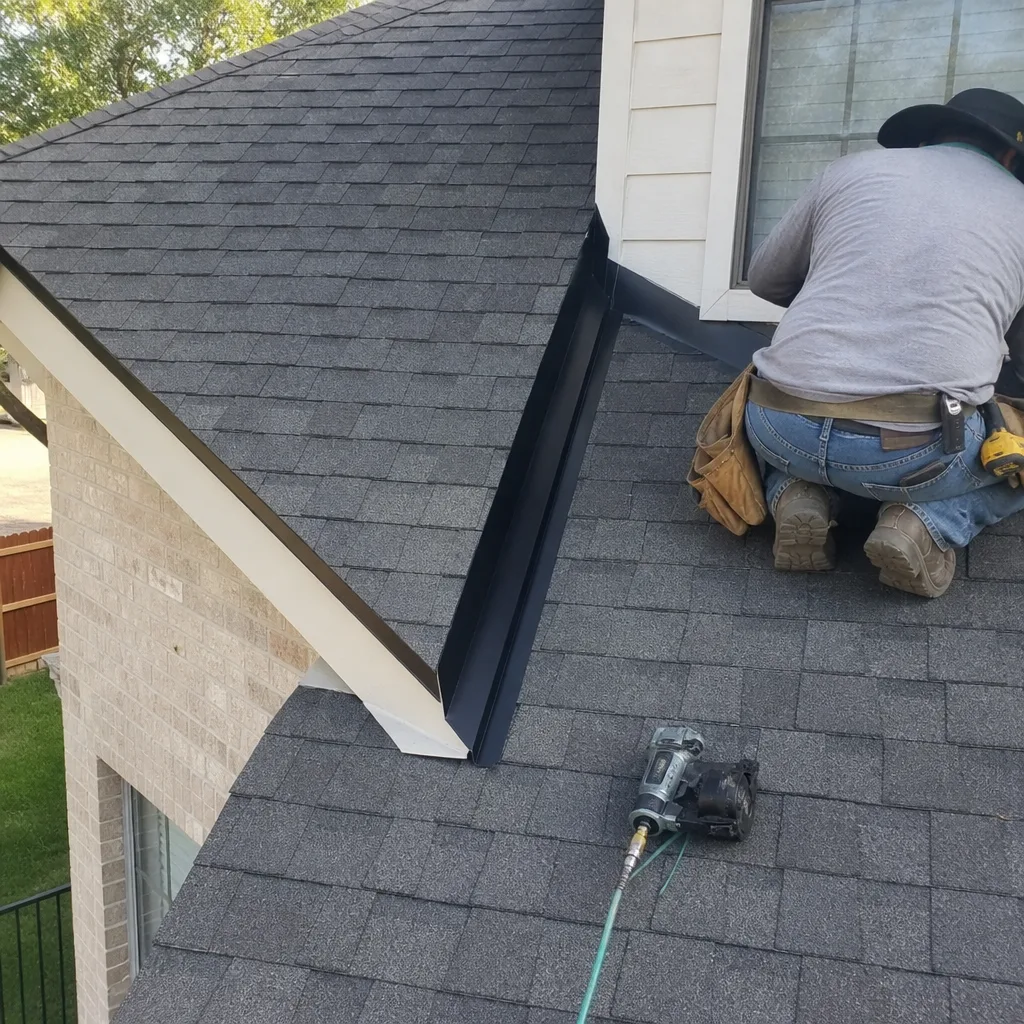 After
After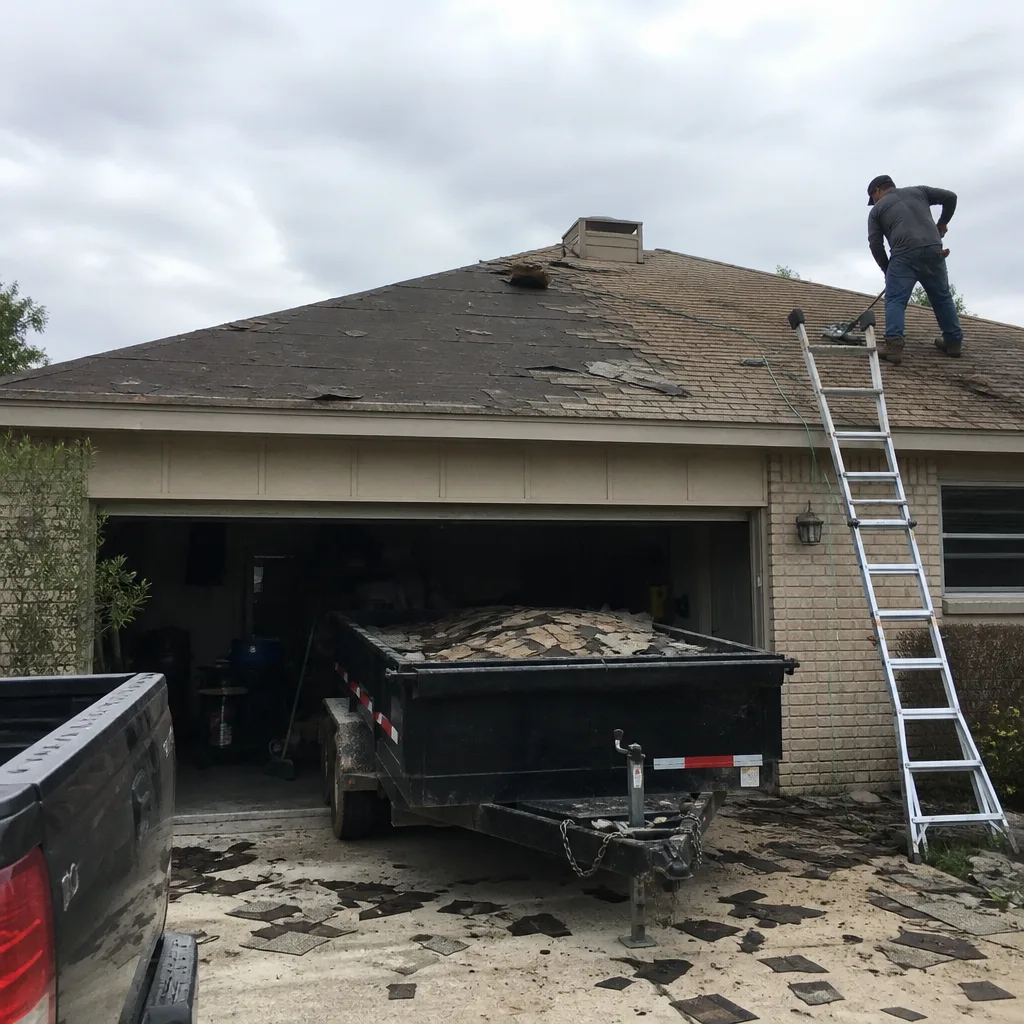 Before
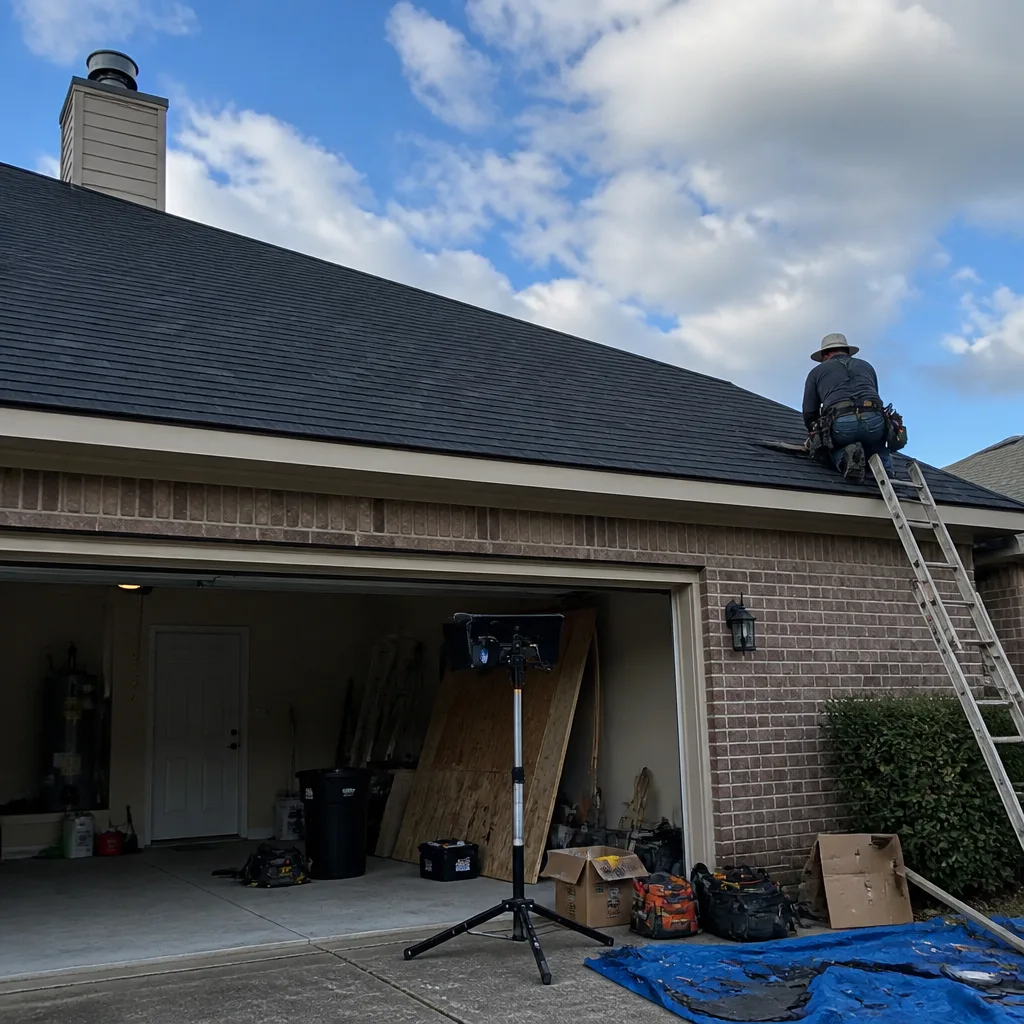 After
After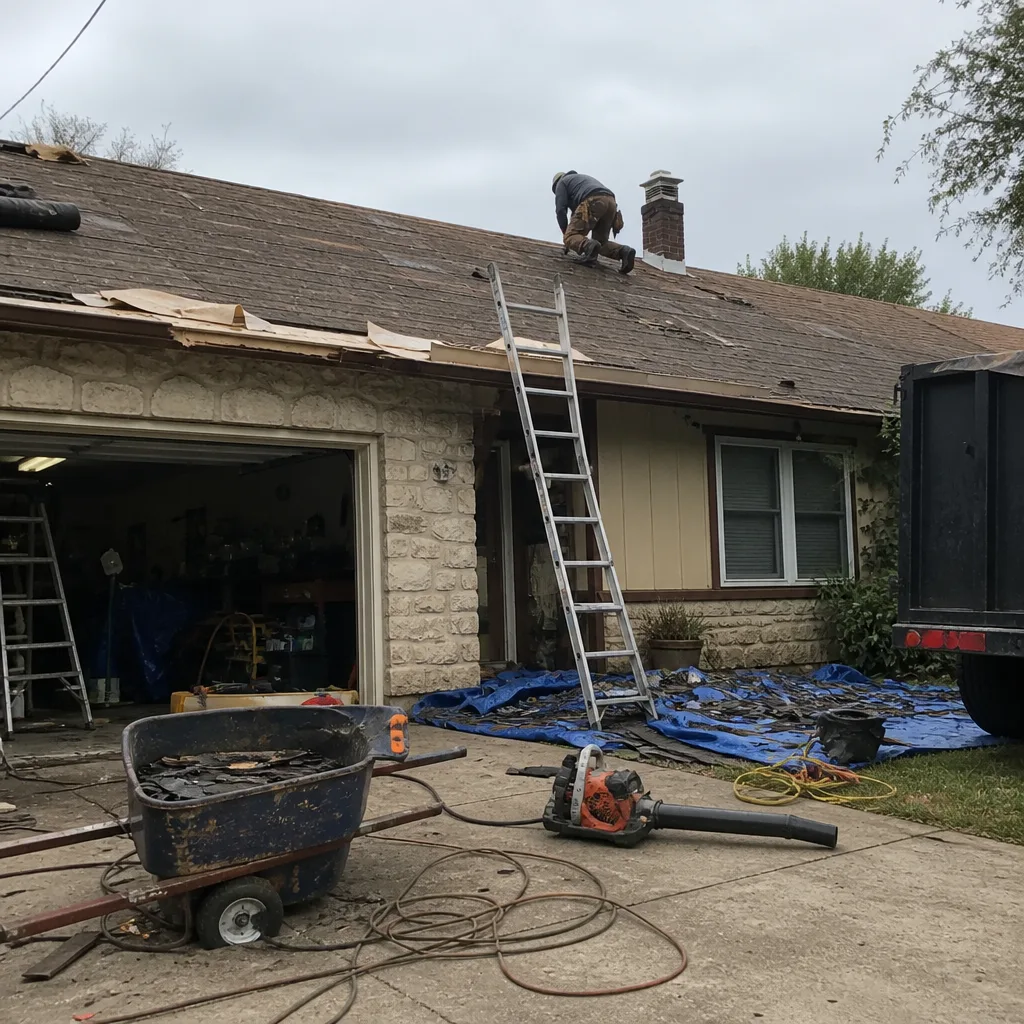 Before
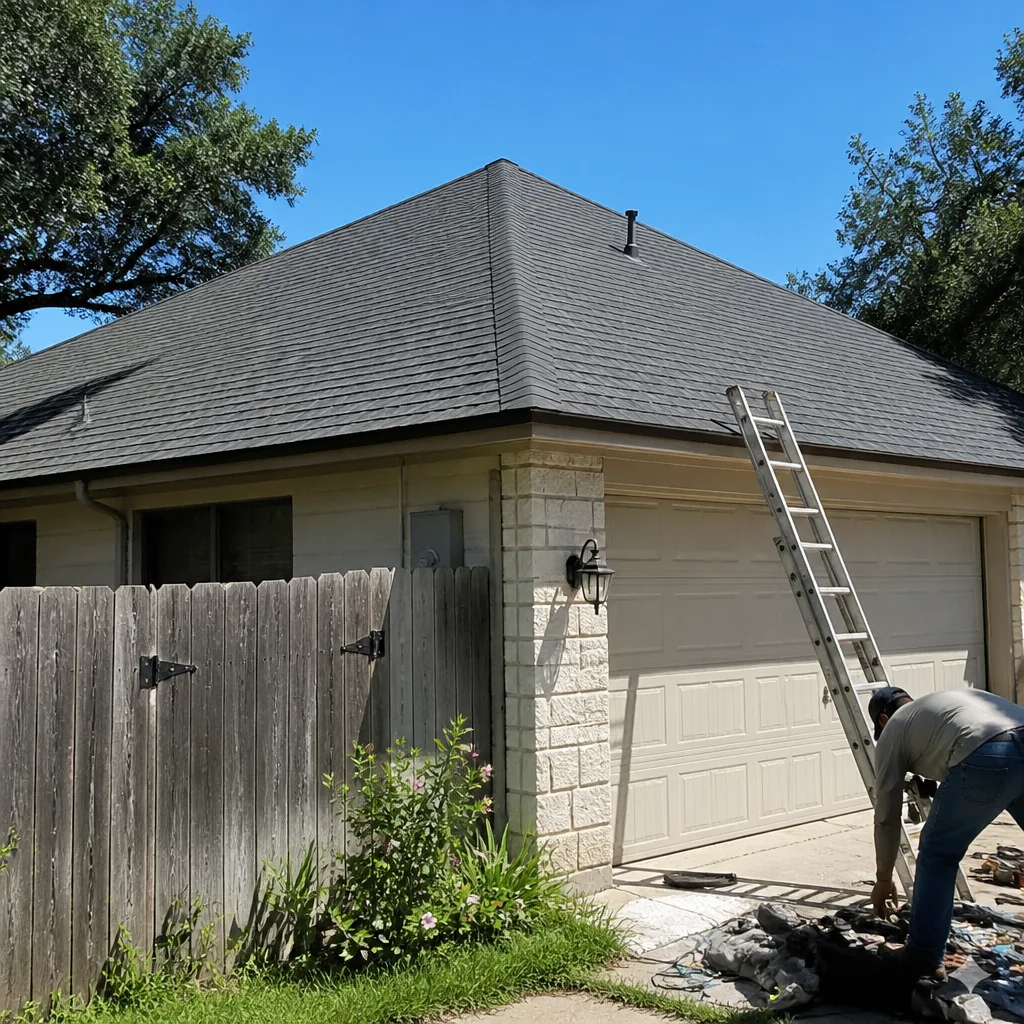 After
AfterReplacement Cost & What’s Included
Here’s what you can expect to pay in San Antonio for Boral flashing replacement, installed:
| Flashing Type | Typical Installed Range | Notes |
|---|---|---|
| Pipe boot / vent stack (single) | $225 – $380 | Most common Boral leak point |
| Step flashing (per 10-foot section) | $280 – $450 | Where roof meets sidewall |
| Valley flashing (per 10-foot section) | $300 – $480 | Higher material cost, longer run |
| Chimney flashing (full reflash) | $450 – $800 | Includes counterflashing and sealant |
The price includes removing the old flashing, inspecting the decking beneath for rot, cutting and fitting the replacement to your Boral profile’s exact rise, resealing all laps, and cleaning up the site. The range reflects what we find when we get under the old flashing: a clean deck job on the lower end, and a repair that includes replacing softened decking or adjusting tile courses on the higher end. What never changes: the written price comes before any work starts, and every repair carries our 365-Day Done Right Promise in writing. If the flashing leaks within a year, we’re back free of charge.
DIY or Call Us?
There’s a safe middle ground here. You can safely inspect your Boral flashing from the ground with a pair of binoculars, look for visible rust, lifted edges, or missing sealant beads. You can also snap photos of the upslope flashing from a ladder if you keep your feet on the ladder and off the roof. That documentation helps us prepare before we arrive.
What you shouldn’t do is get on a Boral stone-coated steel roof with a caulk gun and try to smear a fix. That surface gets slick with even light morning dew, and San Antonio heat makes it hot enough to burn through work gloves by midday. A homeowner slip on stone-coated steel is a serious injury. Beyond the safety concern, a sealant-only repair on failed flashing almost never lasts more than six months. Water that’s already worked behind the flashing needs the flashing pulled, the deck inspected, and the seam rebuilt. That’s our work. Call (254) 276-4369 and we’ll put the written estimate in your hand before we touch anything.
FAQs
Expect 15 to 25 years from properly installed flashing on a Boral roof in this area, though valley and chimney flashing on south-facing slopes may need replacement closer to the 10-to-15-year mark due to sustained UV and heat cycling. If you’re past year 15 on the original flashing and we’re already on the roof for a separate repair, we’ll show you the wear we’re seeing and give you a written quote to address it. Call (254) 276-4369 to schedule an inspection.
Sometimes, but only when the failure is limited to a failed sealant bead or a single lifted lap that hasn’t pulled water behind the flashing. If there’s rust-through, visible daylight gaps, or water-damaged decking underneath, a patch job just buys time. We’ll tell you which one you have, and the written estimate will reflect the correct fix, not the most expensive one. Call (254) 276-4369 and we’ll assess it honestly.
Most single-penetration flashing replacements, like a pipe boot or a short step flashing run, take 2 to 3 hours once we’re on site. A full chimney reflash or long valley replacement can run half a day. We’ll give you a realistic window when we quote the job, and the actual time doesn’t change the written price.
We keep common Boral-compatible pipe boots, step flashing, and valley stock in 26-gauge galvanized and aluminum on the truck, so most replacements are same-visit. Unusual tile profiles or long custom runs may require a short order, usually 2 to 5 business days. We’ll tell you which situation you’re in before you commit to anything.
Written by Grant Whitlock, Owner, Mercer Roofing Co San Antonio at Mercer Roofing Co San Antonio, serving San Antonio and nearby areas.