
 Metal roofing
 Architectural shingles
 Tile roofing
 GAF
GAF Owens Corning
 Flat & low-slope
Free roof inspection with deck photos before we talk money - GAF and Owens Corning certified installation
Styles & brands we work with
See the difference
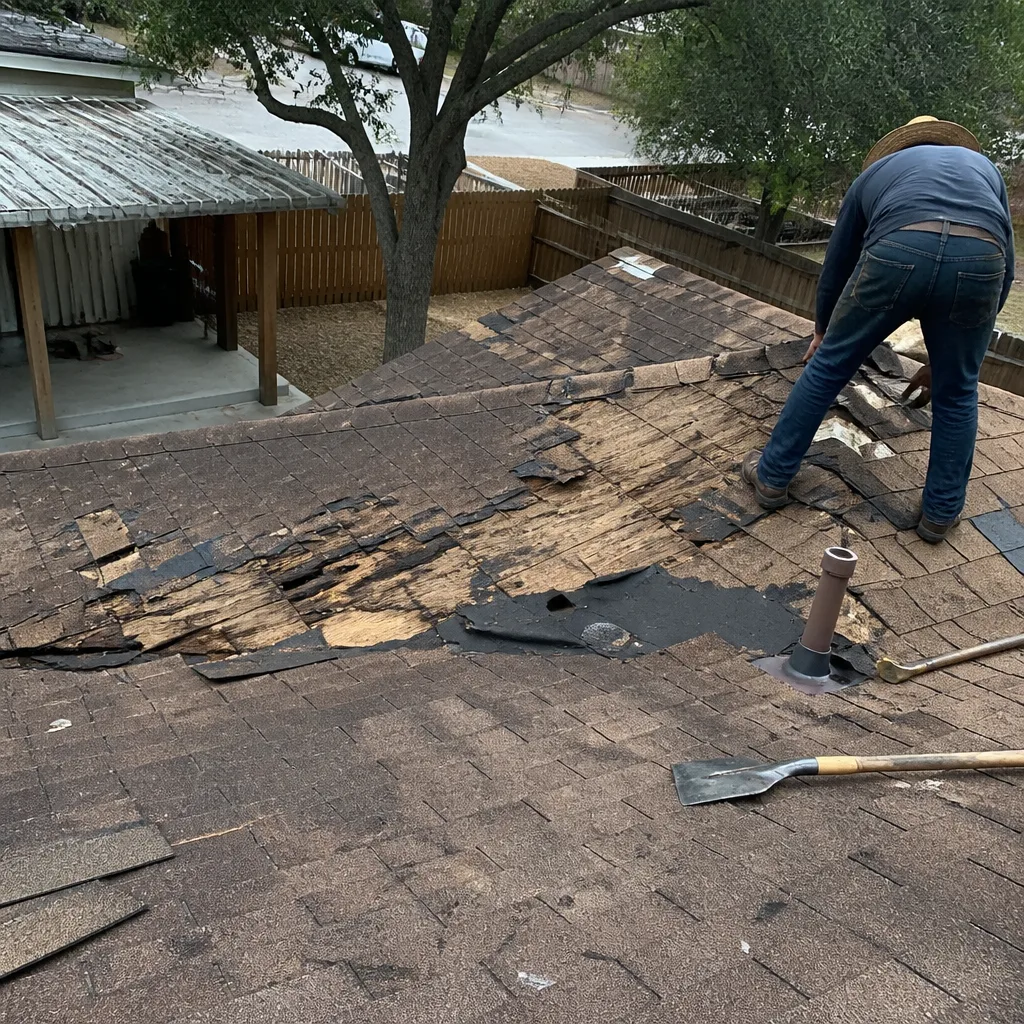 Before
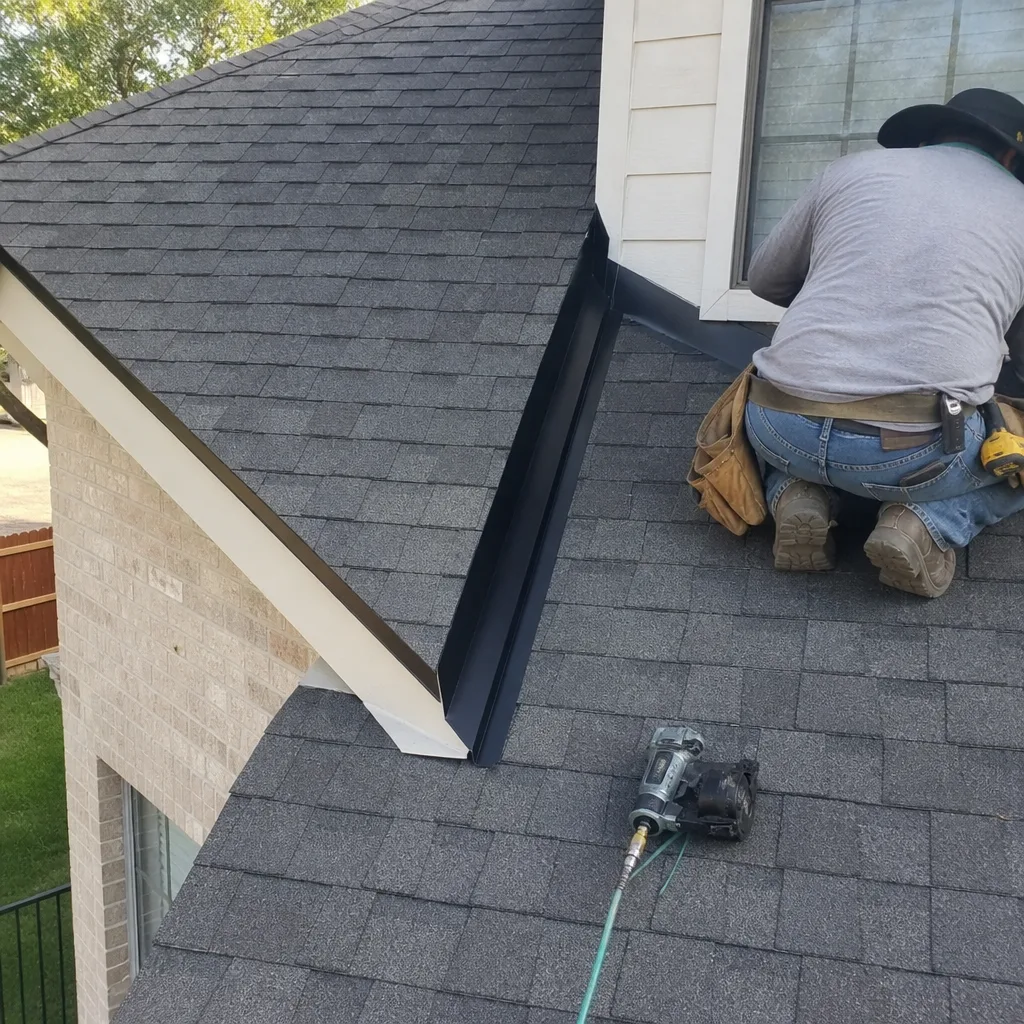 After
After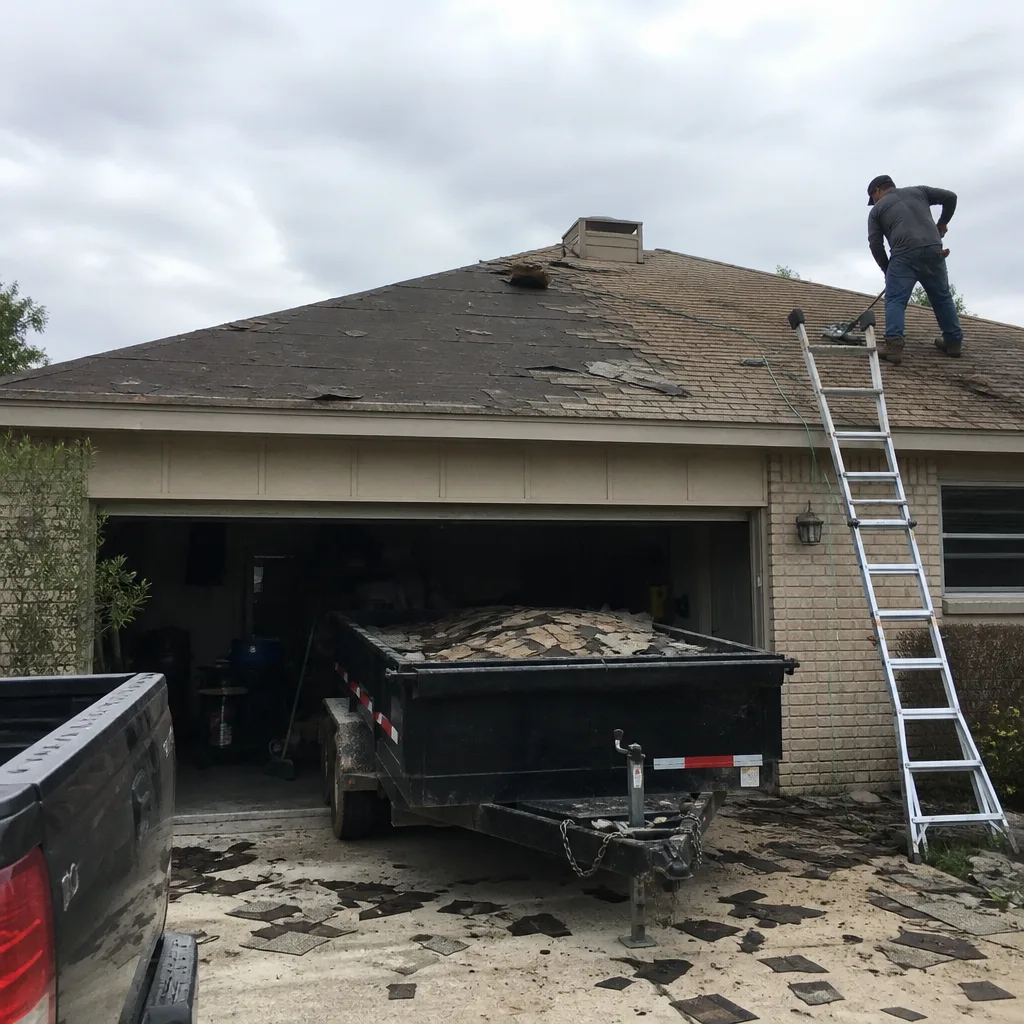 Before
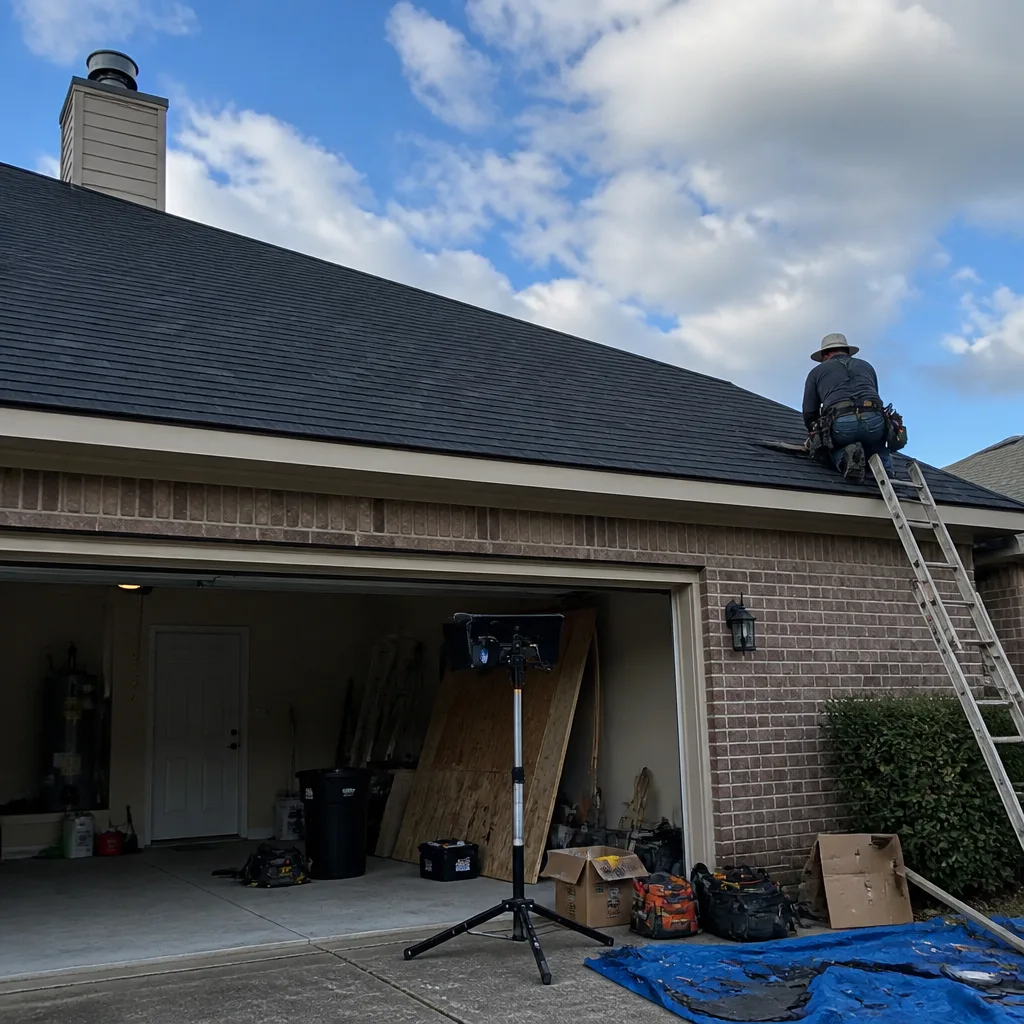 After
After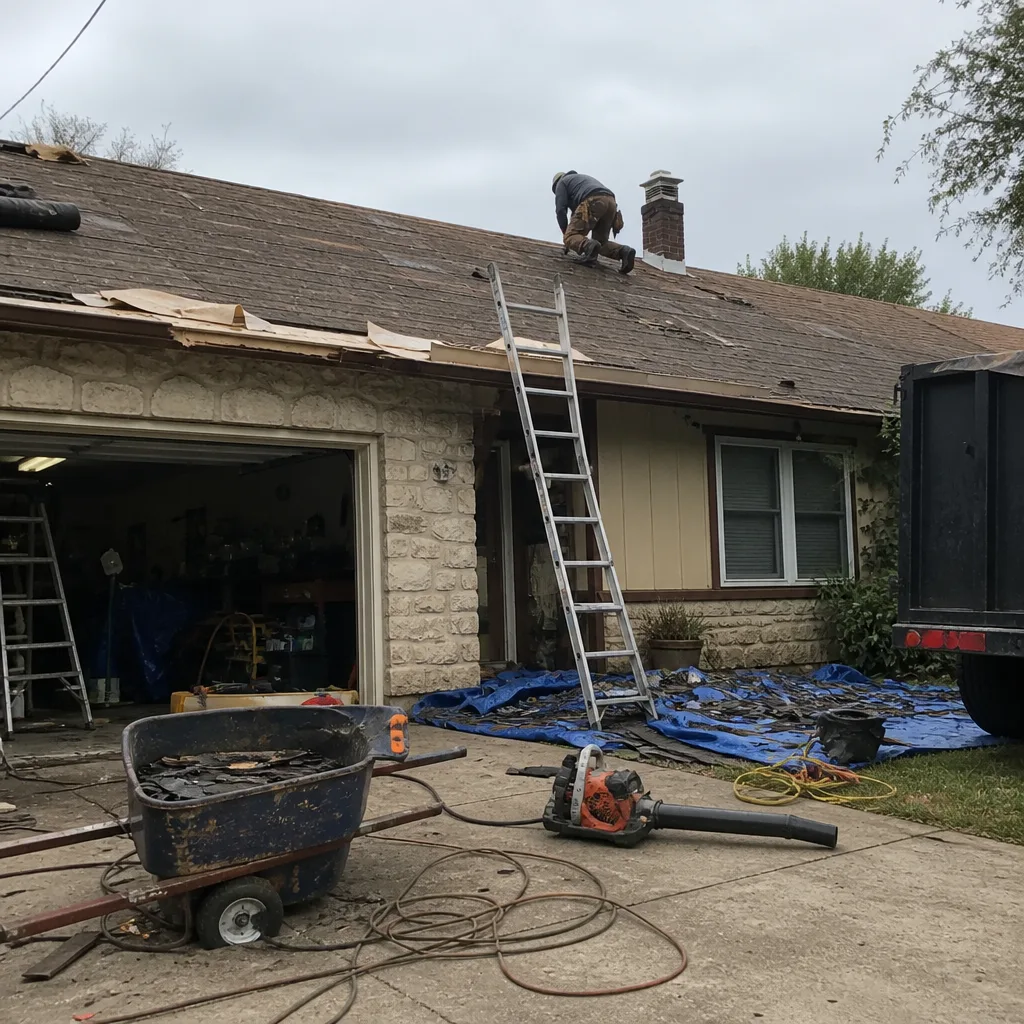 Before
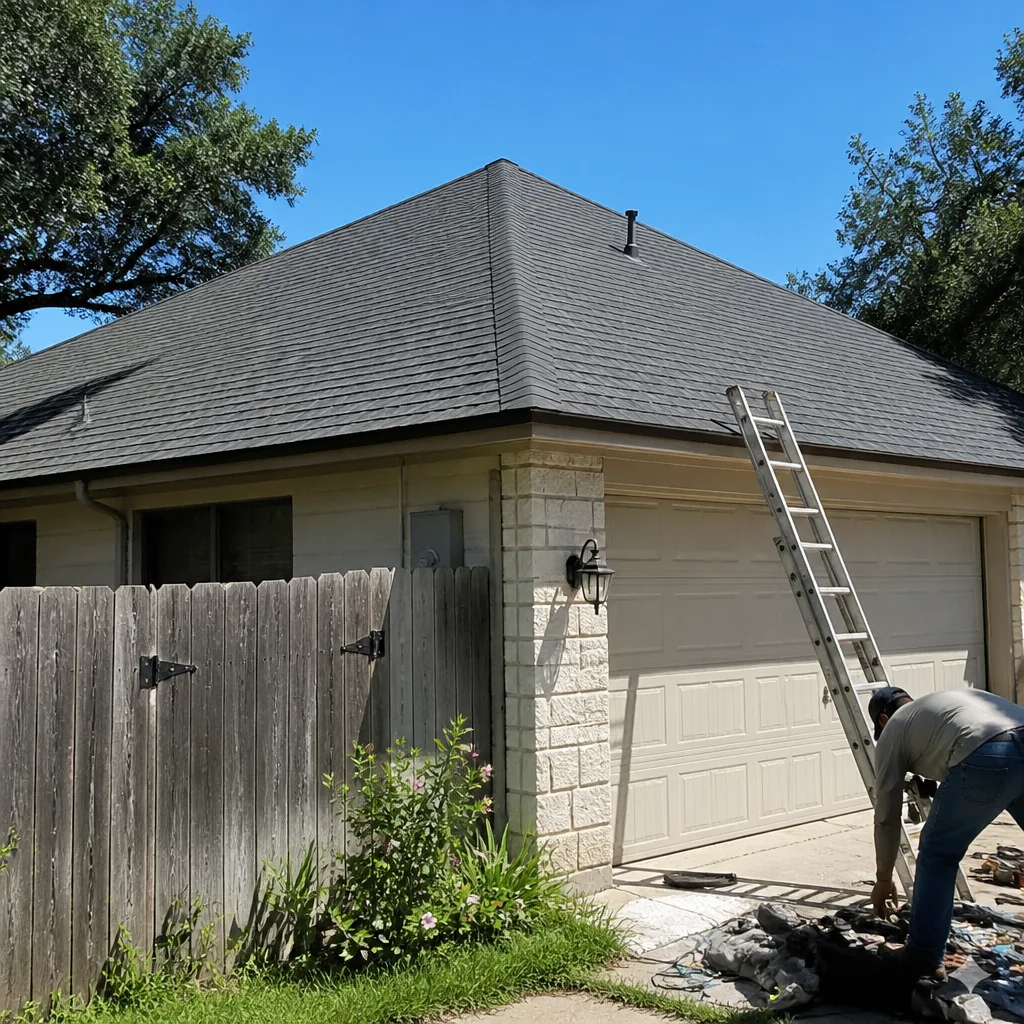 After
AfterFlashing Repair in San Antonio, TX
How Much Does Roof Repair Cost? (2026 Price Guide) - San Antonio, TX puts flashing repair in San Antonio at $350 to $900, depending on how much metal needs replacement and where the leak is. Most flashing repairs can be completed same-day or next-day once we see the problem. If you’re seeing water stains on your ceiling after the heavy spring storms that roll through Bexar County, call Mercer Roofing Co San Antonio at (254) 276-4369 and we’ll send a technician who arrives with a name, a photo ID badge, and a written price before any work starts.
Flashing is the metal material, usually aluminum or galvanized steel, that seals the joints where your roof meets a wall, chimney, skylight, or valley. When it fails, water finds its way in. It’s a common repair here in San Antonio, where the summer sun bakes exposed metal until it expands and contracts, and where the occasional hailstorm dents and cracks it. We handle flashing repair as part of our broader Roof Repair in San Antonio work, and it’s one of the most frequent calls we get from homeowners in Alamo Heights, Stone Oak, and the older neighborhoods around Terrell Hills where original flashing is finally giving out.
What makes us different at the front door is the same thing that makes us different on the roof. Every Mercer Roofing technician is background-checked, identity-verified, and dispatched under the Threshold Verified standard. Before we arrive, you get the technician’s name and photo. When they knock, they’re in a clean, marked uniform with a photo ID badge in hand. You know exactly who is on your property, and that matters as much to us as the quality of the flashing work itself.
When You Need Flashing Repair
Here’s how flashing failure shows up in San Antonio homes and when Leak Repair becomes necessary. If any of these sound familiar, it’s worth having a professional take a look before water works its way into your decking and insulation.
- Water stains on ceilings or walls after rain. Stains that appear near chimneys, skylights, or where the roof meets a wall are classic flashing leaks. In San Antonio’s spring rains, a small flashing gap can let in a surprising amount of water.
- Visible rust, cracks, or separation on metal flashing. Walk around your home and look at the metal where the roof meets any vertical surface. Rust streaks, cracks, or metal pulling away from the wall are signs the flashing is done.
- Loose or missing flashing after a storm. High winds and hail in Bexar County can tear flashing loose. If you see metal hanging from your roofline or lying in the yard after a storm, water has an open path into your home.
- Damp or musty smells in the attic. Flashing leaks often show up as attic moisture before they become ceiling stains. If your attic smells musty or you see water staining on the decking, flashing is a likely culprit.
- Granules or shingle damage near flashing points. When flashing fails, nearby shingles often take the brunt of water flow. If shingles around a chimney or wall are curling or losing granules, the flashing may be leaking underneath them.
- Your home is 15 years old or older. Original flashing on older San Antonio homes, especially in neighborhoods like Jefferson and Beacon Hill, is often made of thinner metal that simply wears out over time. If your home is older and you’ve never had flashing replaced, it’s worth an inspection.
Flashing is not a DIY repair. Working on a roof means working at height, and in San Antonio’s summer heat, it’s work best left to someone with the right training and equipment. A licensed, experienced technician knows how to identify failing flashing, remove it without damaging your roof deck, and install replacement metal that fits your specific roof profile.
Our Flashing Repair Process
When you call Mercer Roofing Co San Antonio, here’s what happens from the first phone call to the finished repair.
- You call and speak to a person. A live person answers at (254) 276-4369, day or night. We ask about what you’re seeing, where the leak is, and when it started. Then we schedule a time for a technician to come out.
- You get the technician’s name and photo before they arrive. Before we show up, we send you the name and photo of the technician coming to your home. No strangers at the door. When they arrive, they’ll be in a marked uniform with a photo ID badge you can match against what we sent.
- We inspect and give you a written price. The technician examines the flashing and the surrounding roof area to find exactly where water is getting in. Then you get a written price that covers the full repair. No work starts until you approve it in writing.
- We remove damaged flashing and prepare the area. Old flashing comes off carefully. If we find damage to the decking or underlayment underneath, we show you what we found before we proceed. The written price may change only if you approve a change.
- We install new flashing, sealed to last. New metal goes in, properly lapped and sealed, with attention to the specific joints and angles of your roof. We use materials that work with manufacturer-recognized shingle brands like GAF, CertainTeed, and Owens Corning, so the repaired area matches the rest of your roof.
- We walk you through everything and hand you the written guarantee. Before we leave, we explain exactly what we did and what to expect going forward. Every flashing repair comes with a written guarantee, and that guarantee is covered by our 365-Day Done Right Promise: if anything we repaired isn’t right within a year, we come back and make it right.
Flashing Repair Pricing in San Antonio
Here’s what flashing repair typically costs in San Antonio, based on the scope of work. These are honest ranges, not vague “call for pricing” numbers. We give you a written price before any work starts, and that price is what you pay.
| Flashing Repair Type | Typical Cost Range | What It Includes |
|---|---|---|
| Small step flashing patch (1-2 feet) | $350 – $500 | Removal of damaged metal, new flashing, sealing, cleanup |
| Chimney flashing repair (one side) | $450 – $700 | Removal, new flashing, new sealant at mortar joint, inspection of adjacent shingles |
| Chimney flashing repair (full replacement) | $800 – $1,500 | Complete removal of old flashing, new step and counter flashing, sealant, inspection |
| Valley flashing replacement | $600 – $1,200 | Removal of old valley metal, new flashing, underlayment repair if needed |
| Skylight flashing replacement | $500 – $900 | Removal of old flashing kit, new flashing, resealing, inspection of skylight frame |
| Wall/roof junction flashing (per section) | $400 – $800 | Removal of old metal, new step flashing, counter flashing, sealing |
What affects the price? A few things. The height and pitch of your roof, whether the flashing is on the first or second story, how much decking or underlayment is damaged underneath, and whether we need to match specialty materials. Homes in older San Antonio neighborhoods like Monte Vista or King William often have custom flashing profiles that require a bit more labor to match correctly.
Every flashing repair estimate from Mercer Roofing Co San Antonio is free. You’ll get a written price you can look at, compare, and think about. There’s no pressure and no obligation. Call (254) 276-4369 and we’ll schedule someone to come out, usually the same day or the next morning, depending on when you call and how urgent the leak is.
What Kind of Flashing Does Your San Antonio Roof Need?
Flashing isn’t one-size-fits-all. Different parts of your roof need different flashing profiles, and using the right metal in the right place is what keeps water out for years. Here’s what our technicians work with across San Antonio homes.
- Step flashing – The most common type, used where a roof plane meets a vertical wall. Each piece overlaps the next in a stair-step pattern, which is why it’s called step flashing.
- Counter flashing – A second layer of metal that goes over step flashing, typically embedded into the wall or chimney mortar. It’s what keeps water from running down behind the step flashing.
- Chimney flashing – A combination of step flashing, counter flashing, and a base layer around the chimney base. Chimney flashing takes the most abuse and fails earlier than other flashing types.
- Valley flashing – Metal that runs along the “V” where two roof planes meet. In San Antonio, valley flashing often fails first because it channels the most water during heavy rains.
- Skylight flashing – A continuous metal lip that runs around the base of the skylight and laps over the shingles. Skylight flashing is a common leak point because the seal breaks down under UV exposure.
- Pipe boot flashing – A rubber-and-metal boot that seals around plumbing vent pipes. The rubber degrades in Texas heat and cracks, letting water run down the pipe into your attic.
When we repair or replace flashing, we make sure the new metal works with your existing roofing material. That’s why we work with manufacturer-recognized shingle brands like GAF, CertainTeed, and Boral. The flashing gets matched to the specific shingle profile and installation requirements of your existing roof, so the repair doesn’t just fix the leak today, it holds up the way the manufacturer intended.
Why San Antonio Homeowners Call Mercer Roofing for Flashing Repair
There are plenty of roofing companies in San Antonio. We know that. So here’s what we do differently, and why it matters when you’re inviting someone onto your property to fix a roof leak.
You know who’s coming before they arrive. Every Mercer Roofing technician has a name and a face, and you get both before they knock on your door. They arrive in a clean, marked uniform with a photo ID badge. If the person at your door doesn’t match the name and photo we sent, that’s not our technician. No exceptions. This is the Threshold Verified standard, and every Mercer location is contractually held to it.
The price is written down before work starts. No verbal estimates, no “we’ll see how it goes,” no surprise line items at the end. You get a written price, and that’s the price. If we find something else during the repair that wasn’t in the original scope, we show it to you and get your approval in writing before we proceed.
Every repair includes a written guarantee. It’s not a handshake. It’s in writing, and it covers our flashing repair work for 365 days. If the repair fails within a year, we come back and fix it. That’s the 365-Day Done Right Promise, and it comes with every job we do.
We’ve been doing this since 2000. Mercer Roofing is part of the Threshold Group family of home-service companies, founded in 2000. Each location is independently owned and operated, but every location is held to the same Threshold Verified standard for technician vetting and quality. You get the consistency of a trusted name with the accountability of a local owner.
We answer the phone. Call (254) 276-4369 and a live person picks up. Day or night. When you have water coming through your ceiling at 9 p.m., you don’t want a voicemail. You want someone who can listen, assess, and get a technician scheduled. That’s what you get.
Common Flashing Problems We See in San Antonio
San Antonio’s climate is hard on flashing. Here’s what we regularly find when we inspect leaking roofs in the area, and how we address each problem.
Sun-Damaged and Cracked Flashing
San Antonio gets more than 220 sunny days a year, and that UV exposure takes a toll on metal flashing. Over time, the metal expands and contracts with the heat, which stresses the joints and sealant. The sealant dries out, cracks form, and water gets through. We see this constantly on south-facing roof planes in neighborhoods like Stone Oak and The Dominion, where the sun hits hardest. The fix is removing the damaged flashing, inspecting the decking underneath for water damage, and installing new flashing with fresh sealant that’s rated for continuous UV exposure.
Hail-Damaged Flashing
When hailstorms roll through Bexar County, they dent and crack flashing along with shingles. A dented flashing piece may not look like a big deal from the ground, but the dent can be deep enough to channel water underneath the metal. We inspect all flashing points after hailstorms, not just the obvious shingle damage, because flashing leaks are sneaky. They start small, and by the time you see the ceiling stain, the damage is done.
Improperly Installed Original Flashing
We’ve done repairs on homes in older San Antonio neighborhoods like Alta Vista and Mahncke Park where the original flashing was never installed correctly. Nails driven through the wrong spot, step flashing that doesn’t overlap properly, counter flashing that’s just for show. When we find bad original work, we don’t just patch it. We remove it and install flashing the way it should have been done from the start.
Flashing Lifted by Wind
Wind-driven rain is a problem in San Antonio during spring and fall storm seasons. When flashing is lifted even a fraction of an inch, wind can push water up underneath it and into your attic. We see lifted flashing on homes in the more exposed areas around Cibolo and Schertz, where storm winds come across open ground. The repair involves re-seating the flashing and securing it properly, not just adding caulk and hoping for the best.
Flashing Repair for Specific Roof Features
Not all flashing repairs are the same. Here’s what you should know about the most common flashing repair points on San Antonio homes.
Chimney Flashing Repair
Chimney flashing is the most complex flashing repair, and it’s also one of the most common. The flashing has to seal four sides of the chimney, including the front (the side the water hits), the sides, and the back (the side the water runs down). In San Antonio, chimney flashing is particularly vulnerable because the mortar in the brick expands and contracts at a different rate from the metal flashing, which eventually breaks the seal. Repairing chimney flashing properly means removing the old flashing, cutting into the mortar joint for the new counter flashing, and sealing everything with a high-quality sealant that can handle both the Texas sun and the freeze-thaw cycles we get in the occasional winter storm.
Skylight Flashing Repair
Skylight flashing failures typically show up as a leak along the top or sides of the skylight. The flashing kit that came with the original skylight installation can fail if it was installed incorrectly, if the sealant has degraded, or if a previous repair was done with the wrong materials. We often see homes where someone tried to stop a skylight leak with caulk alone, which is a temporary fix at best. The right repair is to remove the old flashing, inspect the skylight frame, and install a new flashing kit that matches the skylight and the roof pitch.
Valley Flashing Repair
Valley flashing carries the most water of any flashing point on your roof. In a heavy San Antonio downpour, the valley channels all the water from two roof slopes into one stream. If the valley flashing has rusted through, cracked, or separated, water pours into the underlying decking and into your attic. Valley flashing repair requires removing the shingles along both sides of the valley, replacing the metal, and then reinstalling the shingles. It’s more work than a Flat Roof Patch, but it’s the only way to make the valley watertight again.
Signs Your Flashing Was Installed Wrong
Sometimes the flashing itself isn’t old or damaged, it was just installed incorrectly from day one. Here’s what we find when we inspect homes where the flashing has been wrong since the original build or a previous repair.
- Nails in the wrong places. Flashing nails should be covered by the next flashing piece or shingle. When nails are exposed, water follows the nail into the roof.
- Step flashing that doesn’t overlap. Each piece of step flashing must overlap the one below it by at least a few inches. When pieces are butted together instead of lapped, water gets through the joints.
- No counter flashing. Step flashing alone won’t protect the top of the flashing where it meets the wall or chimney. Without counter flashing, water runs down behind the step flashing and into the structure.
- Flashing that’s too short. Flashing needs to extend at least a few inches up the wall or chimney and a few inches under the shingles. Short flashing is a constant leak source.
- Mismatched materials. Flashing should be compatible with the shingles and the roof deck. When someone uses the wrong metal or the wrong sealant, corrosion and leaks follow.
If we find incorrectly installed flashing during an inspection, we’ll show you photos and explain exactly what’s wrong before any repair work begins. You’ll know what you’re paying for and why it matters.
FAQs – Flashing Repair
How much does flashing repair cost in San Antonio?
Flashing repair in San Antonio typically costs $350 to $900 for most single-point repairs, with full chimney flashing replacement running $800 to $1,500. Your exact price depends on the flashing type, roof pitch, and how much damage is underneath the old flashing. Call (254) 276-4369 for a free written estimate specific to your roof.
How do I know if my flashing is leaking?
You’ll typically see water stains on ceilings or walls near chimneys, skylights, or where the roof meets a wall. Outside, look for rust, cracks, or metal pulling away from vertical surfaces. If you’re not sure, call Mercer Roofing Co San Antonio and we’ll send a technician with a photo ID badge to do a proper inspection and give you a written diagnosis.
Can you replace flashing without replacing the whole roof?
Yes, flashing can be repaired or replaced independently of the rest of the roof. Most flashing repairs take a day or less, and we can often match the existing shingles and roofing materials so the repair blends in. If the surrounding shingles or decking are also damaged, we’ll show you the full scope before any work begins.
How long does flashing repair take?
Most flashing repairs in San Antonio are completed in half a day to one full day, depending on the type of flashing and whether we need to remove and replace surrounding shingles. Chimney flashing replacement is usually the longest, typically taking a full day. We’ll give you a clear time estimate with your written price.
What if the flashing repair leaks again?
If the repair fails within 365 days, we come back and fix it at no charge. Every Mercer Roofing flashing repair includes a written guarantee, backed by our 365-Day Done Right Promise. That’s not conditional, it’s not prorated, it’s in writing on every job. Call (254) 276-4369 and we’ll schedule the return visit.
Is flashing repair covered by homeowners insurance?
It depends on what caused the damage. Flashing damaged by a covered event like hail or wind is typically covered, while flashing that failed due to age or normal wear is generally a maintenance item. We can document the damage thoroughly to support your claim, and many of our San Antonio customers use our inspection findings when filing with their insurer.
Call Mercer Roofing Co San Antonio for Flashing Repair
If water is getting into your San Antonio home, don’t wait for the next rain to see how bad it gets. Call Mercer Roofing Co San Antonio at (254) 276-4369 for Roof Repair you can trust. A live person answers, 24 hours a day. We’ll schedule a technician to come out, send you their name and photo before they arrive, and put a written price in your hand before any work starts. Every repair includes a written guarantee and our 365-Day Done Right Promise. That’s how we’ve worked since 2000, and it’s how we’ll keep working on your roof.
Written by Grant Whitlock, Owner at Mercer Roofing Co San Antonio, serving San Antonio.