
Last updated October 17, 2026
 Architectural shingles
 Metal roofing
 Tile roofing
 GAF
GAF Owens Corning
 Flat & low-slope
Free roof inspection with deck photos before we talk money - GAF and Owens Corning certified installation
Roof Repair Maintenance Checklist for San Antonio Homeowners
The most common reason San Antonio homeowners get partial insurance payouts isn’t storm damage. It’s pre-existing maintenance neglect that adjusters can document in under ten minutes. They photograph curled shingles, rusted flashing, and clogged valleys, then stamp the file “deferred maintenance” and cut the check by 40 percent. This guide is built around the maintenance items that fail first on San Antonio roofs, ranked by how often they trigger claim denials. A targeted checklist is your paper trail.
Styles & brands we work with
Quick Answer
A San Antonio roof maintenance checklist should prioritize five items before anything else: pipe boot seals (which fail faster here due to UV exposure), granule loss on shingles, flashing at valleys and penetrations, gutter anchoring, and attic ventilation. Perform ground-level inspections twice a year, in March and October, document everything with date-stamped photos, and keep those photos in a cloud folder. Repairs under $300 done early prevent insurance claim denials that cost thousands later.
Table of Contents
- Why San Antonio Roofs Fail Differently
- The Five Items Adjusters Photograph First
- Month-by-Month San Antonio Maintenance Calendar
- The 12-Point Ground-Level Inspection Checklist
- Pipe Boot Seals: San Antonio’s Silent Failure Point
- Documentation Habits That Strengthen Claims
- Common Mistakes to Avoid
- When to Call a Professional
- Frequently Asked Questions
- The Bottom Line
Why San Antonio Roofs Fail Differently
San Antonio sits in a climate band that punishes roofing materials in ways a Cleveland or Seattle roof never experiences. We get 220-plus days of sunshine annually, and July and August routinely push attic temperatures past 140 degrees. That heat bakes shingles from above and below simultaneously. The asphalt in the shingle mat dries out, loses flexibility, and starts shedding granules at an accelerated rate. A shingle rated for 25 years in a temperate climate may show meaningful wear by year 14 or 15 in San Antonio.
Then comes the hail season. San Antonio sits in what meteorologists call Hail Alley, a stretch of Texas that sees more hailstorms than nearly anywhere else in the country. March through May is the primary window, but we’ve seen October hailstorms too. Hail impact on a roof that’s already heat-stressed causes damage that goes deeper than it would on a fresher roof. The combination of UV baking and impact stress means San Antonio homeowners need to be more diligent about maintenance than the national average, not less.
There’s also the freeze cycle to consider. San Antonio doesn’t get hard freezes often, but when it does, the result is predictable. Water that has worked its way into micro-cracks expands when it freezes, widening those cracks further. A hairline gap in flashing that was fine in July becomes a leak source after a February freeze. This freeze-thaw cycling, even if it only happens a handful of times per winter, accelerates deterioration in ways that surprise homeowners who think of San Antonio as a purely hot climate.
Our roof repair work in San Antonio consistently shows the same pattern: the roofs that need the most extensive work are usually the ones that haven’t been looked at in three or more years. Maintenance isn’t optional here. It’s the difference between a $300 fix and an $18,000 replacement.
The Five Items Adjusters Photograph First
Insurance adjusters follow a predictable pattern when evaluating a claim. They arrive with a camera and a checklist, and they move through it fast. Here are the five maintenance items they photograph first when looking for evidence of neglect, and what to do about each one before you ever file a claim.
1. Pipe boot seals with visible cracking
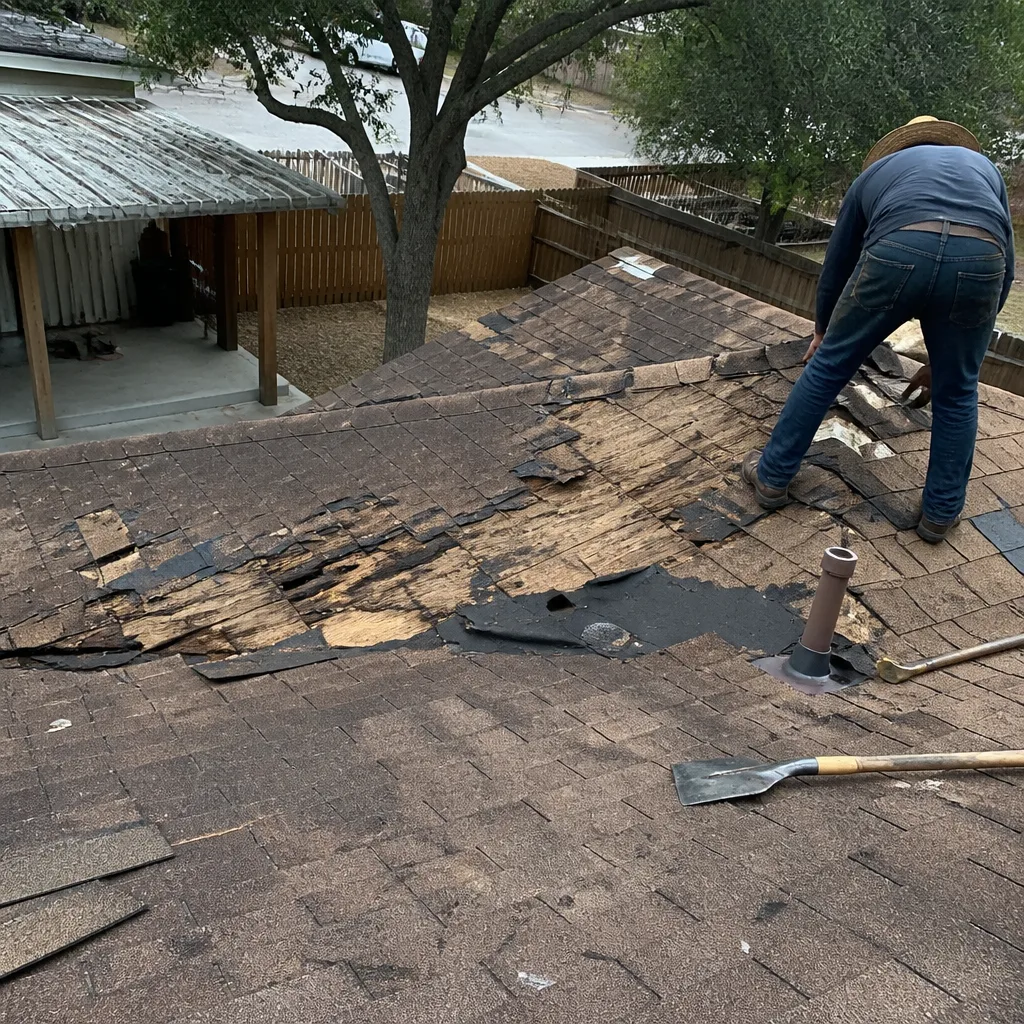
The rubber boot around plumbing vent pipes is the first thing an adjuster’s lens finds. In San Antonio’s UV environment, these rubber collars dry out and crack within five to seven years. A cracked boot is a textbook pre-existing condition because it takes months of sun exposure to develop that pattern. Adjusters know this. Replace boots proactively every five to seven years. The part costs $15 to $30, and a roofing company in San Antonio typically charges $75 to $150 installed per boot.
2. Granule loss in concentrated patches
Shingles shed granules naturally as they age, but when an adjuster sees bare spots or heavy granule accumulation in gutters, they document it as wear rather than storm damage. You can check this yourself: look at the ground near downspouts after a rain. If you see significant dark, gritty material there, that’s granule loss. A small amount is normal. A visible pile is not.
3. Rusted or lifted flashing
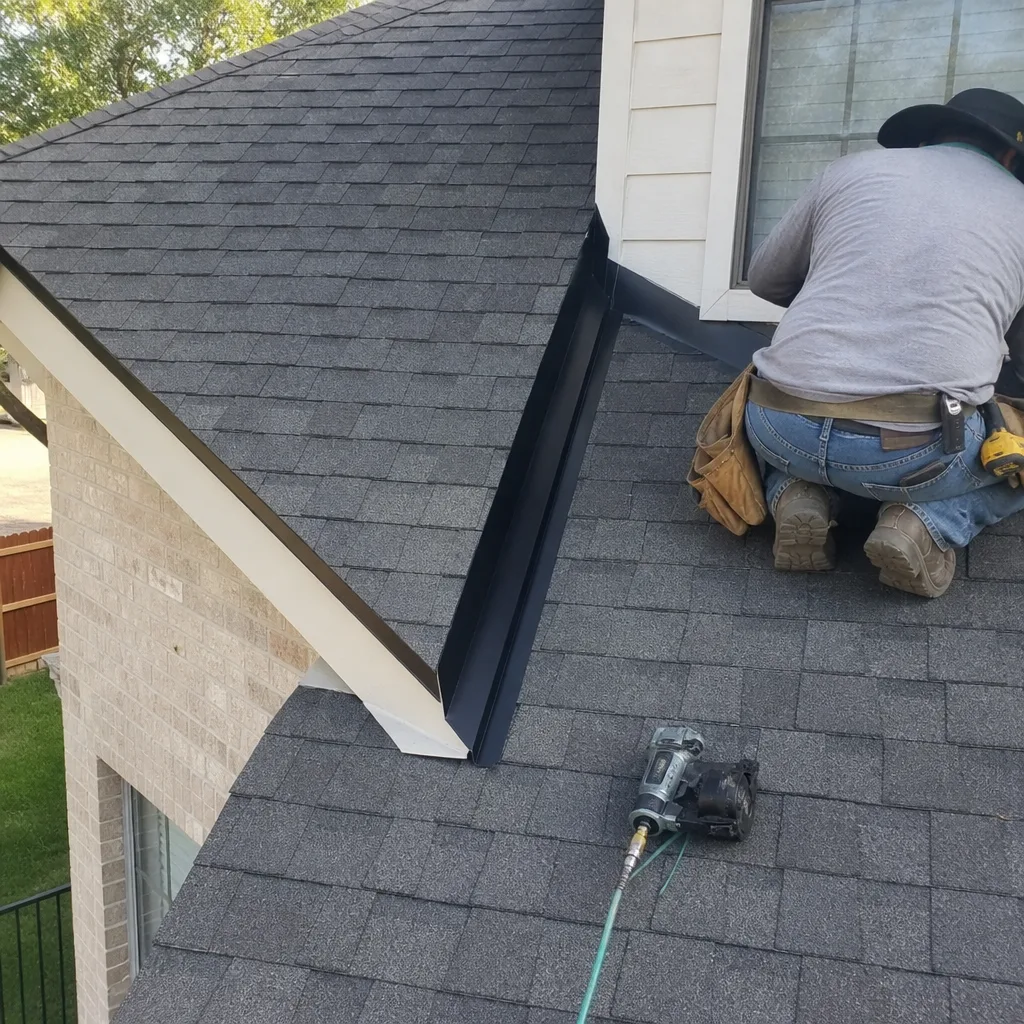
Flashing around chimneys, skylights, and wall intersections rusts over time. Once rust sets in, water gets through. An adjuster who sees rusted flashing knows the leak predates the storm. Flashing replacement varies by linear foot, but a typical chimney flashing replacement in San Antonio runs $400 to $800 depending on accessibility and material.
4. Clogged or sagging gutters
Gutters full of debris are the clearest signal of deferred maintenance. Water that can’t drain properly backs up under the roof edge and rots the fascia and decking. Adjusters photograph overflowing gutters as evidence that the homeowner didn’t maintain the roof system. Clean gutters twice a year and check that the gutter fasteners are still tight.
5. Unsealed or lifted shingle edges
When shingles lose their adhesive seal, wind catches the edges and lifts them. A roof with multiple unsealed shingles tells the adjuster the roof was already compromised before any storm. A small tube of roofing cement can reseal a lifted edge for about $10, but you’ll want to inspect the whole roof to see how many shingles are affected.
Month-by-Month San Antonio Maintenance Calendar
San Antonio’s climate doesn’t follow a neat four-season pattern, so neither should your roof maintenance. Here’s a month-by-month calendar built around actual weather conditions we see in Bexar County and surrounding areas like Alamo Heights, Stone Oak, and Helotes.
January: Freeze Watch
Check the forecast weekly. Before any projected freeze, walk the perimeter of your home and look for visible cracks in flashing or exposed nail heads. Water that gets into a gap and freezes will expand that gap. After a freeze, do a quick visual check for ice dams, which are rare in San Antonio but do occur on north-facing roof sections.
February: Attic Check
Go into the attic on a sunny day and look for any light coming through the roof deck. Light means a gap. Also check for water stains on the underside of the decking, especially around vent pipes and chimneys. This is the cheapest inspection you’ll ever do, and it catches problems while they’re still small.
March: Pre-Hail-Season Prep
Hail season in San Antonio ramps up in March. Before it arrives, clean your gutters, check that all shingles are fully adhered, and photograph every slope of your roof from ground level. Those photos become your baseline documentation if a storm does hit. If your roof is over 12 years old, consider getting a professional roof repair evaluation before hail season peaks.
April: Peak Hail Awareness
April is the most active hail month in San Antonio. After every storm, do a ground-level visual inspection within 24 hours. Look for dents in metal vents, cracked shingles, and granules in the gutter downspouts. Document everything with your phone. If you see damage, file a claim promptly; adjusters look more favorably on claims filed within days, not months.
May: Post-Storm Assessment
By late May, the worst hail risk has usually passed. Do a full 12-point inspection (see below). Repair anything you find. This is also a good time to have your gutters cleaned again, since hail often knocks leaves and twigs loose from surrounding trees.
June-August: UV Stress Monitoring
Summer heat is when pipe boots and rubber seals degrade fastest. A boot that looked fine in March may show cracking by August. If you can’t safely access the pipe from a low-slope section of roof, check from the attic side: a boot that’s failing often shows a dark ring where water has seeped around the pipe.
September: End-of-Summer Assessment
After three months of 100-degree days, inspect everything that’s rubber, plastic, or adhesive. These materials take the worst beating in San Antonio’s summer. Also check for shingle curling, which accelerates when attic ventilation is inadequate. If you notice curling along the eaves, investigate your attic ventilation before it gets worse.
October: Post-Summer-UV Repairs
October is the best month for roof work in San Antonio. Temperatures are mild, rain is minimal, and you have a window before winter. Address everything you found in September. Replace cracked boots, reseal lifted shingles, and touch up flashing. A roof repair in San Antonio done in October sits on your roof through winter with time to properly cure.
November: Pre-Holiday Check
Before guests arrive for the holidays and before the busy season hits, do a quick visual sweep. Check for debris accumulation, especially in valleys. Look for any shingle tabs that shifted during October winds. November is also a good time to trim tree branches that hang over the roof; falling limbs during winter storms are a common source of preventable damage in San Antonio.
December: Pre-Freeze Inspection
San Antonio occasionally gets a hard freeze in December or January. Before the first one arrives, make sure all flashing is secure, all boots are intact, and all gutters are clean. A minor gap plus a freeze equals a leak. The repair costs more in January than it would have in October.
The 12-Point Ground-Level Inspection Checklist
You do not need to walk your roof to inspect it well. In fact, most shingle manufacturers will void the warranty if you do walk it improperly, and the risk of falling is real. A thorough ground-level inspection with a pair of binoculars and a smartphone camera catches 90 percent of what a roof walk finds, without the risk.
Here’s a 12-point checklist you can complete in under 30 minutes:
- Shingle edges: Walk the perimeter and look for shingles that are curling, lifting, or missing. Pay special attention to the south-facing slopes, which get the most sun in San Antonio.
- Granule loss: Check the ground near downspouts for piles of dark granules. Also look at the shingle surfaces for patchy or bare areas.
- Pipe boots: Use binoculars to inspect every plumbing vent pipe. Look for cracks, gaps, or rubber that appears shriveled or pulled away from the pipe.
- Flashing at chimneys: Look for rust, gaps, or missing pieces where the chimney meets the roof. Chimney flashing is one of the most common leak sources in San Antonio homes built before 1990.
- Valley debris: Check roof valleys for accumulated leaves, twigs, or granule buildup. Blocked valleys force water sideways under shingles.
- Gutter fastening: Look for gutters that sag, pull away from the fascia, or have visible screws popping out. Loose gutters catch water and direct it against the home instead of away from it.
- Fascia and soffit condition: Scan for peeling paint, water stains, or visible rot along the roof edge. These indicate water has been sitting where it shouldn’t.
- Ridge cap condition: The ridge cap shingles run along the peak of your roof. Look for cracks, missing pieces, or uneven laying patterns.
- Roof penetration sealant: Check around satellite dishes, antenna mounts, and any other roof penetrations. The sealant around these breaks down faster in San Antonio heat.
- Wall flashing and counterflashing: Where the roof meets exterior walls, check that the flashing is still tucked into the siding and not pulling away.
- Skylight seals: Skylight flashing and curb seals are frequent leak points. Look for cracked caulk or lifted metal edges around the skylight perimeter.
- Overall symmetry: Step back and look at your roofline. Any sagging, waviness, or unevenness is a structural red flag that needs immediate professional attention.
Photograph every finding with a date-stamp. Even if it looks minor, the photo goes in your maintenance file. If you ever file a claim, that file becomes evidence of diligence rather than neglect.
Pipe Boot Seals: San Antonio’s Silent Failure Point
If there’s one component that fails first on San Antonio roofs, it’s the pipe boot. These rubber collars wrap around the plumbing vent pipes that stick up through your roof, and they’re made of rubber that simply wasn’t designed for 220 days a year of intense UV exposure. In cooler climates, a pipe boot might last 12 to 15 years. In San Antonio, we routinely see boots cracking at the five- or six-year mark.
The failure is silent. A cracked boot doesn’t leak dramatically on day one. Water seeps slowly through the crack, saturates the surrounding decking, and doesn’t show up on your ceiling until the damage has spread. By the time you see a stain, the repair work has expanded from a $125 boot replacement to a decking repair that could run several hundred dollars.
Replacement cost in San Antonio: $75 to $150 per boot installed. The part itself is $15 to $30. The labor is straightforward for any professional roofer and usually takes under an hour. Compare that to the cost of decking repair after a slow leak: $500 to $1,500 depending on the affected area.
How to spot a failing boot from the attic: If you can access the area where vent pipes exit through the roof deck, look for a dark, wet ring around the pipe on the underside of the decking. This ring indicates water has been seeping through. Also check for daylight visible around the pipe itself. Both are clear signs the boot above has failed.
What to do: Replace all pipe boots at the same time. If one is cracked, the others are close behind. The incremental cost is modest, and doing all of them at once means you reset the clock on every roof penetration at the same time. This is the single best preventive maintenance investment a San Antonio homeowner can make on an aging roof.
Documentation Habits That Strengthen Claims
Insurance adjusters make decisions based on evidence. If you have a documented history of maintenance, you change the equation. A homeowner with three years of dated roof photos and repair receipts is far more likely to receive a full payout than a homeowner with no paper trail. Here’s a documentation system that takes fifteen minutes a month and stands up to adjuster scrutiny.
What to document
- Every inspection: Date-stamped photos of all four roof slopes, the ridge line, every pipe boot, and all flashing points.
- Every repair: Receipts from contractors, photos before and after. Keep the receipt and the photos in the same folder.
- Every storm event: Photos taken within 24 hours of any hail or high-wind storm, even if you don’t see damage.
- Every improvement: If you replace boots, reseal flashing, or clean gutters professionally, document it.
How to organize it
- Create a cloud folder named “Roof Maintenance” in Google Drive, iCloud, or Dropbox.
- Add subfolders by year: “2024,” “2025,” etc.
- Name every photo with the date and location: “2025-03-15-north-slope.jpg” or “2025-10-02-pipe-boot-rear.jpg.”
- Save every contractor receipt as a PDF in the same year folder.
- Set a quarterly reminder on your phone to upload any straggler photos.
This system takes almost no time once established, and it directly counters the adjuster’s most common finding. When they photograph a cracked boot or a lifted shingle, you can show a photo from six months earlier of that same area looking fine. That’s evidence of a sudden event, not slow neglect.
A note on our own work: every repair Mercer Roofing Co San Antonio completes comes with written documentation of exactly what was done and what condition the surrounding roof was in. We photograph before and after as a matter of course. When you hire us, we’re building your paper trail alongside you. More on our roof repair service in San Antonio.
Common Mistakes to Avoid
- Walking the roof yourself: Beyond the fall risk, improper foot placement damages shingles and voids manufacturer warranties. Most San Antonio roofs are steep enough that a fall means a serious injury. Use binoculars from the ground.
- Ignoring granule loss: Granules aren’t cosmetic. They’re the UV protection layer on your shingles. Heavy granule loss means your shingles are aging prematurely and need professional assessment.
- Waiting to file a storm claim: In San Antonio, insurance companies track claim timing. Claims filed within a week of a documented storm event are processed differently than claims filed months later. If you think you have damage, document it and call your insurer.
- Using the wrong sealant: Shingles and flashing require specific roofing sealants, not general-purpose silicone from the hardware store. The wrong sealant fails within a year in San Antonio heat and can damage surrounding materials.
- Neglecting attic ventilation: Poor attic ventilation shortens shingle life and drives up cooling costs. If your attic feels like an oven in August, your roof is cooking from underneath. Consider adding ridge vents or a solar attic fan.
- Skipping the documentation step: The maintenance you do only helps your insurance claim if you can prove you did it. An unphotographed pipe boot replacement is an unreported improvement.
- Trusting door-to-door roofers: After every San Antonio hailstorm, out-of-state crews descend on the city. Many do good work. Many don’t. Ask for local references, verify licensing, and never let anyone onto your roof without proper identification.
When to Call a Professional
Some maintenance tasks are genuinely DIY. Others require professional equipment, training, or a safety harness. Call a roofer when you see: sagging rooflines, extensive shingle loss across multiple slopes, water stains on interior ceilings, daylight through the roof deck in the attic, or any structural concern. Also call after any hailstorm that produced larger than pea-sized hail; hail damage is often invisible from the ground and requires a professional assessment.
Mercer Roofing Co San Antonio offers free estimates in San Antonio with no obligation. Every technician who arrives at your door will be background-checked, in uniform, and carrying a photo ID badge. We send the technician’s name and photo to you before they arrive, so you always know exactly who is coming. Call (254) 276-4369 to schedule your free estimate.
Frequently Asked Questions
Basic DIY maintenance (sealant, gutter cleaning tools, documentation supplies) runs $50 to $150 per year. Professional maintenance like pipe boot replacement runs $75 to $150 per boot, gutter cleaning averages $150 to $350 per visit, and a full professional roof inspection typically runs $200 to $400, though many companies offer free inspections after storms. Call (254) 276-4369 for an exact quote on your specific roof.
At minimum, twice per year: once in March before hail season and once in October after summer’s UV stress. Add an additional inspection after any hailstorm, high-wind event, or freeze. A roofing company in San Antonio can provide free post-storm assessments, which is the most efficient way to verify whether damage occurred.
It can. Many shingle manufacturers, including GAF and Atlas, state that improper foot traffic can void coverage. Walking on a hot San Antonio roof in July also softens the shingles, making them more susceptible to footprint damage. Unless you know exactly where to step and have proper safety equipment, use a ground-level inspection with binoculars or hire a professional for roof repair evaluation.
Pipe boot seal failure, plain and simple. The UV intensity in San Antonio dries out the rubber collars around plumbing vent pipes faster than almost anywhere else in the country. Replacing all boots every five to seven years is the single best preventive investment you can make, and it costs less than $150 per boot typically.
An asphalt shingle roof rated for 25 years will usually last 14 to 18 years in San Antonio, depending on attic ventilation, tree cover, and maintenance habits. Clay tile and metal roofs last considerably longer, but they’re a bigger initial investment. A roof installation in San Antonio should always be evaluated with local climate factors in mind; national averages don’t apply here.
It depends on the damage and your deductible. If the repair cost is below or only slightly above your deductible, pay out of pocket. Filing small claims can raise your premiums and make future claims harder. Document everything either way. If you’re unsure whether the damage rises to claim-worthy, a professional assessment can give you an honest answer without an obligation to file. Call (254) 276-4369 for guidance.
The Bottom Line
San Antonio’s climate punishes roofs in specific, predictable ways: UV degradation of rubber and sealants, accelerated granule loss, and the twin threats of hail season and freeze-thaw cycles. A maintenance routine built around those realities, documented with date-stamped photos, and executed on a consistent schedule is the difference between a roof that lasts 18 years and one that fails at 12. The five items adjusters photograph first are all addressable with modest investment and regular attention. Start with the pipe boots, keep the gutters clean, document everything, and call a professional when a ground-level inspection raises questions. The paper trail you build today is the claim payout you secure tomorrow.
Written by Grant Whitlock, Owner at Mercer Roofing Co San Antonio, serving San Antonio since 2000.
See the difference
 Before
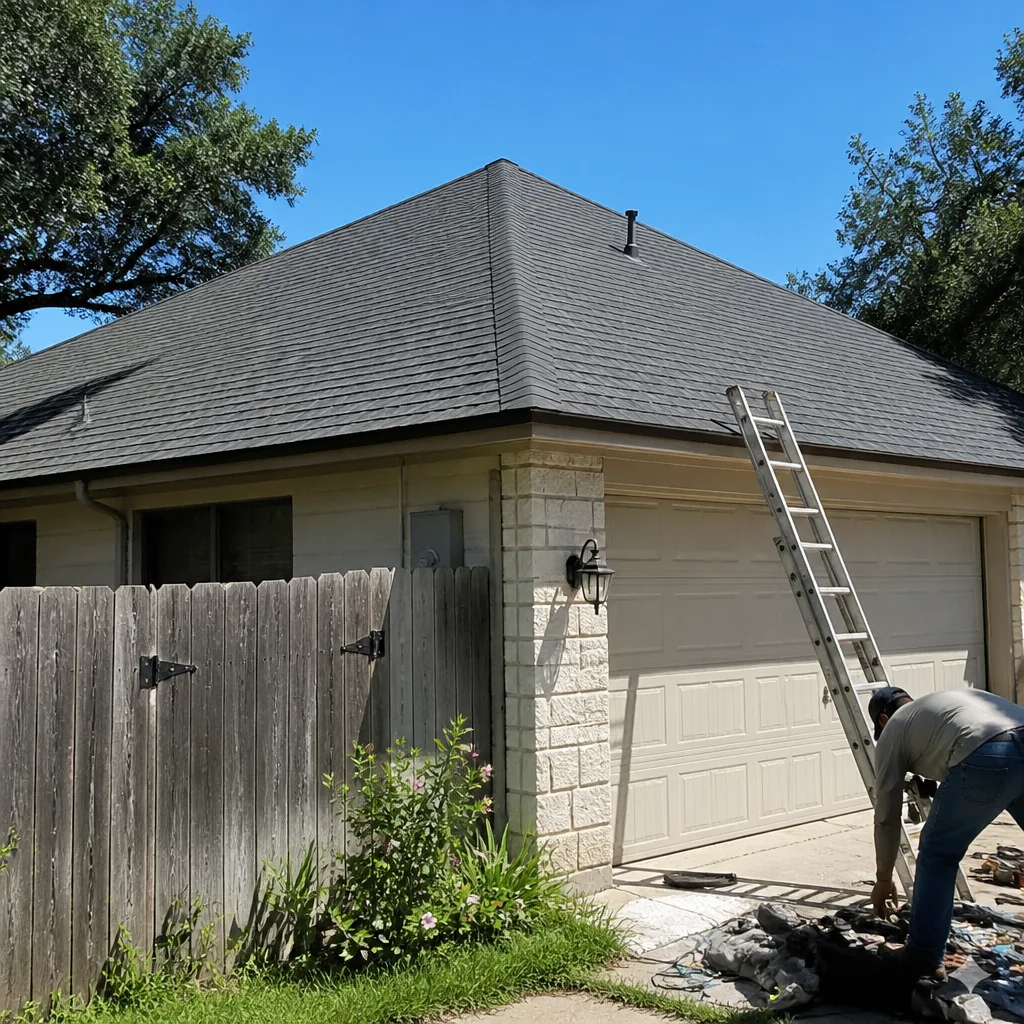
 After
After Before
 After
After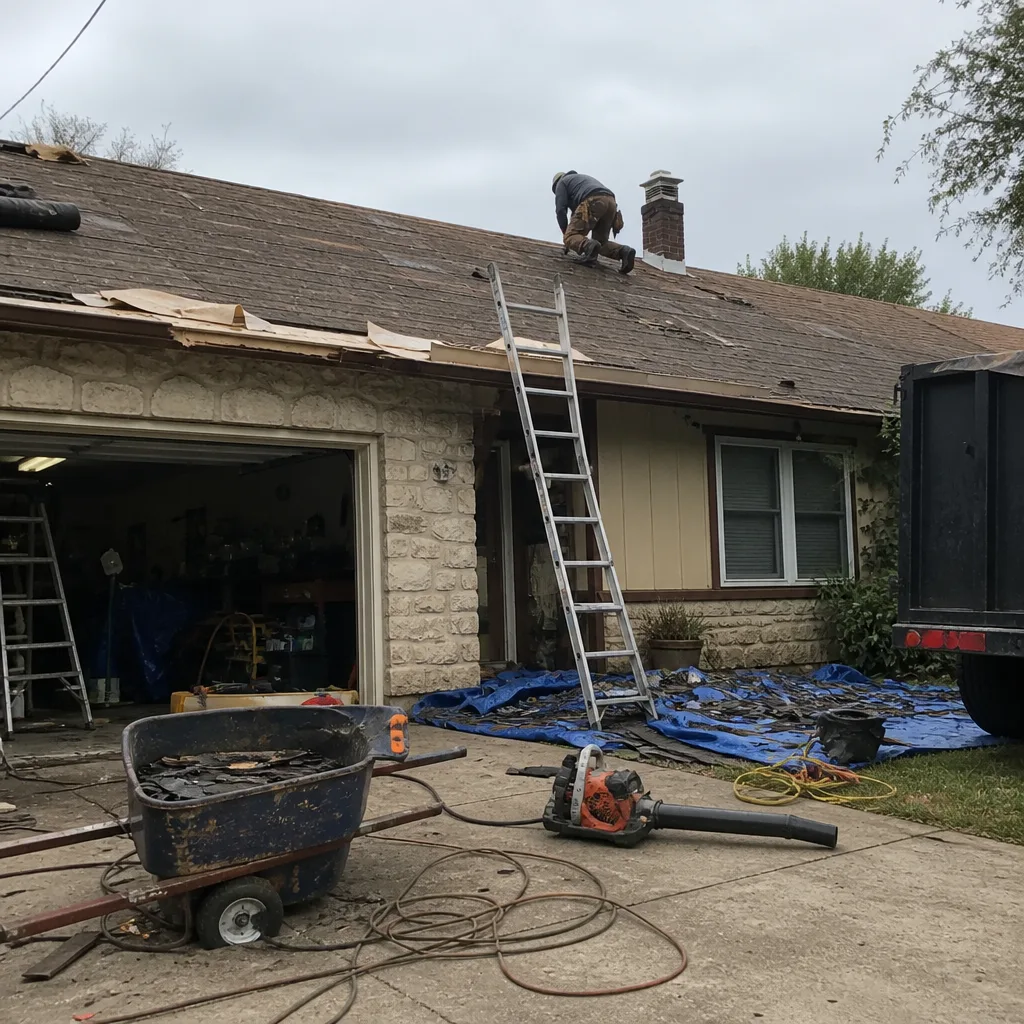 Before
 After
After